Everything Event Organisers Need to Know About Towerlight Hire
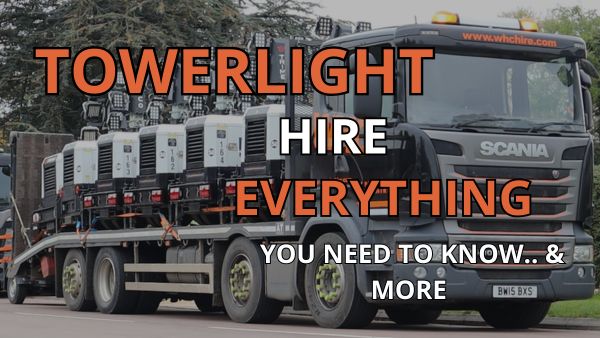
If you are planning an outdoor event, there is no doubt that towerlight hire is going to sit towards the bottom of your to-do list. But by the time you come around to organising it, you often find yourself trying to pull out all the stops. For those of you not aware, towerlights are mobile, mast-mounted lighting units designed to illuminate large outdoor areas well into the evening and overnight.
For event organisers, that single capability solves a large number of operational and health and safety problems all at once. This can include prep that runs late during the build phase, car parks and campsites that need safe visibility once your crowds arrive. And, once your event has finished, towerlights play a vital role in the breakdown procedure, especially on events running during the colder winter months.
WHC Hire Services have supplied towerlights to hundreds of events across Gloucestershire, Worcestershire and Oxfordshire, from festivals needing full perimeter coverage to small shows requiring a single access route. Whether you are running a single-day fete or a large-scale festival, getting the right towerlight design and quality means one less thing to worry about on site.
If you are in the market to hire, this guide covers everything you need to know when it comes to hiring towerlights for your outdoor event. Including costs, who to hire from, fuel types to consider, how much coverage you get from each sized machine, how easy they are to set up, and vehicle considerations when positioning them yourself on site. If you have a larger equipment requirement for your event, our Event Equipment Hire stocklist provides a wide range of machinery covering site services such as welfare units, lifting equipment and access equipment.
How Much Do Tower Lights Cost to Hire?
Diesel towerlight hire cost can vary between £75.00 and £120 per day, with the exact price depending on the machine’s size, mast height and the time you require the equipment for. If you need a costing quickly, you can reach out to the team at WHC Hire Services for a quotation.
It is worth noting that solar and hybrid towerlights also exist on the wider market, and some organisers opt for these due to specific operational requirements such as noise or fuel restrictions on site. These units typically attract a larger premium, sometimes costing up to £300 per day.
Nevertheless, here are some key factors that can either increase or decrease the overall cost of diesel hire.
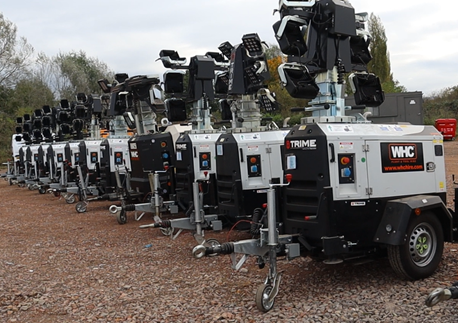
Factors That Increase Towerlight Hire Cost
- Single-day hire — a single-day booking always carries the highest rate, as it often includes full delivery, collection and servicing regardless of how long the unit is on site for
- Long delivery/collection distance — the further the equipment has to travel, the larger the overall hire cost will be
- Multiple units — small events may only require one or two units, whereas larger festivals may need dozens, and the overall cost increases with each unit added
- Fuel management handled by your supplier — this can work out more expensive than doing it yourself.
Factors That Decrease Towerlight Hire Cost
- Weekly or monthly hire — longer durations bring down the hire rate per day and can offer huge savings overall
- Fewer units — where your site layout allows for effective positioning, this can reduce the number of units required and lower overall costs
- Self-managed fuel and positioning — where your own crew handles refuelling and site logistics of the units
- Booking early — this not only secures your hire, but also saves you from paying higher last-minute rates
When it comes to requesting a quotation, always ask for a full breakdown of the price. This may include delivery charges and the cost of fuel. Each towerlight supplier has their own way of operating, so it is best to have a clear picture before committing.
Who to Hire Your Towerlights From
One of the biggest decisions any event organiser has to make is, “who can I trust to deliver my towerlight hire?” In truth, not all event equipment hire suppliers are the same. And for events, the cost of getting this wrong is far higher than for standard construction hire. Incorrect equipment delivery, quality issues or a breakdown can usually wait until the next day on a construction site. A tower light failing on an active event site when the light is fading is something that cannot.
Here is what to look for when choosing a supplier for your event:
Local Depot Coverage
A supplier with a local depot close to your event site means faster delivery, quicker response times and lower delivery costs overall.
Experience With Events
Many hire companies’ bread and butter is construction and DIY needs, not necessarily events. Some of these suppliers may not be familiar with the delivery windows, public safety considerations and unloading schedules that events require.
Well-Maintained, Modern Fleet
During your enquiry, always ask how old the equipment is, along with the manufacturer and design type, so you can accurately compare offers between different suppliers. Quality machinery under regular inspection by qualified engineers is far less likely to let you down mid-event.
Delivery & Logistics
Not every event equipment hire supplier has the means to move their own equipment. Some rely on third-party couriers. Others run their own fleet of HGVs along with their own delivery team. Meaning your equipment is loaded, secured and transported by people who truly understand it.
Accreditations & Safety Record
Awards from respected governing bodies are a good indication of a business’s commitment to excellence while operating around the public.
Support Beyond Delivery
Some suppliers offer on-site demonstrations or guidance when units are dropped off, along with in-house breakdown cover, giving you peace of mind when operating on a tight timeline.
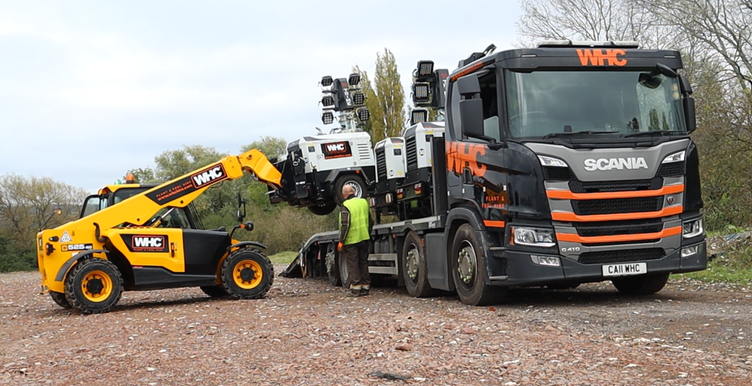
WHC Hire Services has been trading for nearly 30 years. During this time, we have accumulated a number of internationally recognised health and safety awards, including 8 consecutive RoSPA Gold Awards. We run a low-hours fleet backed by a highly skilled and trained HGV delivery team and in-house engineers. Every towerlight in our fleet undergoes a detailed inspection to ensure it operates yto the highest standard, ensuring a streamlined experience. From ordering to on-site demonstration and off-hire collection, our service is a trusted, reliable choice for event organisers looking for excellence.
Diesel, Eco, Solar or Hybrid: Which Tower Light Suits Your Event?
The wider towerlight market offers a few different power options, and while not every supplier will be able to offer every unit type, it is worth understanding how they compare. This can help you make the most informed decision based on your event’s specific requirements.
Diesel Towerlights
These are the most widely available option you are likely to find, and still remain the go-to choice for the vast majority of outdoor events. They offer reliability, high power output and can run for long, periods without replenishment. In most scenarios, this acts as a big advantage when dealing with multi-day festivals or long overnight builds. Diesel units are also very cost-effective to hire and best suit sites where nosie and fumes are not a primary concern.
Eco Towerlights
Made from the same dependable power as diesel towerlights, eco towerlights run off a more fuel-efficient generator, which drastically reduces fuel consumption and running noise compared to their standard counterparts. Our Trime X Eco 9M towerlights, for example, are able to run continuously for 210 hours on a single tank of fuel. This makes them a strong contender for events looking to reduce operational costs without sacrificing the reliability of a diesel engine.
Solar Towerlights
These units run on battery power charged by solar panels, making them silent in operation and free from fuel and emissions. They are exceptionally good for events with strict noise requirements and those positioned close to residential areas. However, weather and daylight can affect their output and runtime, which can be problematic for winter events.
Hybrid Towerlights
These units combine a diesel generator with battery storage, aiming to reduce runtime and fuel consumption. They suit events looking to reduce their environmental impact without having to solely rely on weather-dependent solar charging.
For most outdoor events, diesel and eco models remain the most practical, reliable and accessible machines for event organisers looking to hire, especially when running multiple units across a large site or over the period of several days.
How Much Coverage Do You Need for Your Event?
One of the biggest challenges for event organisers is getting the right number of towerlights on site. In truth, this comes down to your event’s footprint, layout and how many zones need lighting. This usually includes car parks, campsites, backstage areas and major access routes.
As a general guide, a 9m towerlight will offer around 4,000m² of illumination, making them a strong contender for perimeter and access lighting. However, the number of units required will always depend on your specific site layout, sight lines and any obstructions.
Small Sites/Fetes
A small fete or show can be covered with just one or two units, positioned correctly at key points or near the main activity area.
Medium Sites
Small single-day festivals or village shows usually benefit from between three and five units spread across car parks, access points and the main event area.
Large Sites
Major festivals, multi-field events or outdoor venues often need six or more units positioned by zone rather than a single blanket layout.
How Easy Are Towerlights to Set Up?
Towerlights are designed to be straightforward for event organisers to set up, even without specialist operational experience. Most units are towable, self-contained and ready to operate within a few minutes of landing on site.
Here is an example of a typical tower light setup procedure:
- Position the towerlight, either by hand or using a suitable vehicle for larger models
- Engage the handbrake if the towerlight is trailer-mounted
- Check for overhead obstacles, especially important when working close to treelines
- Check wind speed to ensure the equipment’s stability will not be compromised during use
- Complete your pre-start checks, including oil, fuel and hydraulic oil for mast erection
- Unfold the outriggers and level the unit
- Unlock the towerlight’s mast from its transport position
- Position the headlamps to suit your requirements
- Power on the machine’s engine
- Raise the mast using the built-in hydraulic system
- Switch on the lamps
Here is a quick video demonstration of how to set up our 9m Trime Eco tower lights, which are popular with event organisers:
Tips for a Smoother Set Up
Whether you are a first-time hirer or a seasoned professional, these tips can help speed up your tower light setup process.
On-Site Demonstration
Most event equipment hire suppliers will provide a brief demonstration when the unit(s) are delivered. This means your crew knows exactly how to operate, reposition and shut down the equipment safely, without having to call your supplier mid-job.
Operational Briefing
There is currently no certification for operating a towerlight, unlike access and lifting equipment. However, before use you breid your teams and adhere to the safety information included in the equipment’s handbook to ensure safe operation.
Position Once
While all towerlights are portable, planning your layout and distribution before the equipment arrives means you only have to move it once when it lands on site. Continuous repositioning can have a real effect on the efficiency of your setup.
Which leads us now on to using the right equipment to position the equipment on site.
Suitable Vehicle to Tow Or Position Your Towerlight
Most towerlights you can expect to hire for events or venues are either trailer-mounted or have fixed wheels, which raises the question of what the most suitable way to move or tow them actually is.
There are a few options, but the most significant factor at play here is the machine’s weight, and this should be the first thing you check.
For example, our 5m diesel-powered tower lights weigh 335kg and have their own wheels, whereas our Trime Eco 9m towerlights are trailer-mounted and weigh 920kg. Lighter towerlights are designed to be positioned by hand or with the use of a telehandler, which removes the effort of manual handling. As they do not have a tow bar or towing eye, they are unable to couple with an ATV or other towing vehicle.
The larger 9m tower lights, on the other hand, may be too heavy to be towed by a standard ATV, but can still be easily positioned with either a telehandler or a suitable towing vehicle. Note that the vehicle you use must be capable of towing over one tonne for safe use.
Beyond this, there are a few additional considerations to make:
Compatible Tow Hitch and Electrics
For towable towerlights, you should ensure the machine’s towing hitch is compatible with the vehicle you intend to use. Along with a working electrical connection for the trailer’s lights if you plan to travel on the road.
Suitable Ground Clearance
Event sites are often on grass and sometimes uneven terrain. In this instance, using a 4×4 or alternative agricultural vehicle is preferable to using a standard car.
Room to Manoeuvre
Reversing a trailer-mounted towerlight into a tight backstage or campsite is more demanding than towing on the road. It is worth having a driver comfortable with reversing a trailer, not just towing.
Towing Eye Compatibility and Other Factors
One of the biggest unplanned errors with event crews hiring towerlights is ensuring that trailer-mounted units are compatible with the vehicle you intend to use. Picture this: you have managed to get the equipment to site, the clock is ticking, and suddenly you have not got a compatible hitch to support safe towing of the tower light. It may be a small detail, but it is one that can cause a logistical nightmare.
Towing Eye Type
WHC’s trailer-mounted 9m Trime Eco towerlights operate on a drop pin towing eye rather than a ball hitch. Before you arrange delivery or collection, it is vital that you confirm these match, since the designs are not interchangeable, regardless of whether the vehicle has enough towing capacity.
Safety Chains and Breakaway Cables
Trailer-mounted towerlights should also be fitted with a secondary safety chain or breakaway cable, which acts as a safety backup in case the primary coupling fails. Be sure to check this is in good condition and attached correctly before towing.
Trailer Lighting and Number Plate
While this may not apply to all event crews, it is important to note that if you need to tow your towerlight on the road, you will require a legal number plate on the rear of the trailer. This will also include a lighting board with working brake lights, indicators and so on. This does not apply when transporting on private land.
Load Security for Transit
Before towing, make sure the mast is locked and in its designated transport position, and that the outriggers are folded, stored correctly and secured. Transporting a machine that is only half packed away could quickly compromise the safety of others and damage the unit.
If you are ever unsure whether your vehicle and coupling type are suitable to tow a specific unit, it is always worth asking your supplier to confirm before collection, rather than finding out the hard way on the day.
Frequently Asked Questions
How long can I hire a tower light for?
You can hire towerlights from a single day up to several weeks at a time, covering your entire build, event delivery and breakdown period. As mentioned earlier, longer hire durations generally bring the cost per day down significantly, so it is worth booking for your complete timeline rather than day by day.
Do tower lights need a generator?
No, towerlights are self-contained with their own power source. You do not need a separate generator to run one.
How bright is a tower light?
Power output and coverage vary between models and manufacturers. Most towerlights are bright enough to illuminate a wide working area, which is why positioning and coverage planning matter more than raw brightness alone.
Can tower lights run unattended overnight?
Yes, towerlights can run unattended once set up correctly. This is one of the main reasons they suit overnight security lighting, campsites and breakdown periods after your event finishes.
Do I need multiple tower lights, or will one cover my whole site?
The number of towerlights you need depends entirely on the size of your site. You can cover a small site with one or two units, whereas larger festivals usually require six or more units positioned by zone.
Does WHC deliver tower lights to event sites?
Yes, WHC Hire Services runs an in-house HGV delivery team who can deliver towerlights to site. With years of experience working with major venues such as Cheltenham Racecourse and Henley Royal Regatta, and festivals including Devaund Festival, our team has the experience and know-how to get the job done.
What is the difference between diesel and eco tower lights?
Both towerlights operate on diesel power. However, eco models offer much more efficiently, using less fuel and generating less noise than standard diesel units, all while offering the same functionality and reliability.
Final Thoughts
Towerlight hire is easy when it is not left as an afterthought, or left until the very last minute your event needs it. Getting the right unit, from the right supplier, positioned correctly using suitable equipment, can become one less thing you need to worry about across your event build, delivery and breakdown. But as with all event equipment, there are peak times where everyone needs the same machinery at the same time.
This is where booking and securing your equipment in advance becomes essential.
Looking for a reputable, experienced supplier of towerlights for events? Speak to the team at WHC Hire Services to help you get the equipment you need to deliver unforgettable experiences. Browse through our Event Equipment Hirestocklist, and build a quote with our team today.