Boom Lift Hire: Costs, Types & How to Choose the Right Access Equipment Hire
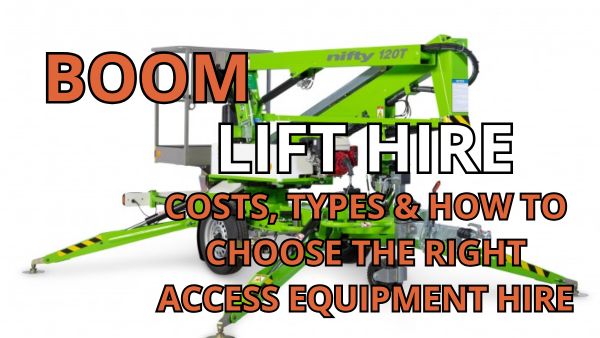
Optimising boom lift hire can be hugely advantageous for businesses that need safe and reliable access to work at height. Commonly known as cherry pickers, boom lifts provide both vertical and horizontal reach, making them ideal for projects where access is restricted or obstacles are present.
Unlike other access platforms available for hire, such as scissor lifts or access towers, boom lifts offer greater flexibility and precision. This makes them particularly useful for complex environments where manoeuvrability is essential.
Hiring a boom lift also allows businesses to access the right equipment quickly, without the financial burden of purchasing and ongoing ownership costs.
In this guide, we’ll cover everything you need to know to confidently choose and arrange boom lift hire for your project.
Types Of Boom Lift Available To Hire
Understanding the different types of boom lifts is essential when choosing the right equipment for your project. Many businesses make the mistake of selecting a machine based purely on maximum reach, when in reality, additional features and functionality can significantly improve productivity and efficiency on site.
Below are the most common types of boom lifts you’re likely to come across:
Articulated Boom Lifts
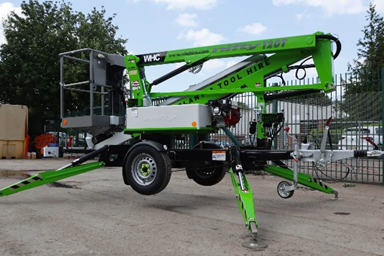
Articulated boom lifts feature multiple joints, allowing the arm to bend and manoeuvre around or over obstacles that restrict access to the working area.
These machines are particularly well suited to tight or restricted spaces, working around structures, and operating within indoor or complex environments. Some models also include outriggers, which provide additional stability when working on uneven ground.
Telescopic Boom Lifts
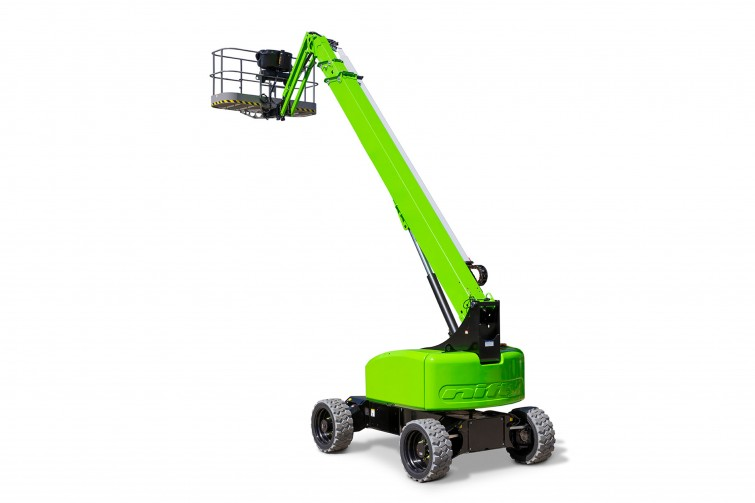
Telescopic boom lifts, also known as straight boom lifts, extend in a straight line to maximise both vertical and horizontal reach.
They are best suited to open working areas, high-reaching tasks, and projects that require only extended horizontal outreach. These machines often provide a higher lifting capacity, making them suitable for carrying heavier loads across a wide range of construction and industrial applications.
Electric vs Diesel vs Hybrid Boom Lifts
Boom lifts are available in a range of power options, each suited to different working environments.
Electric boom lifts are ideal for indoor use, offering quiet operation and zero emissions, making them suitable for enclosed or sensitive environments.
Diesel boom lifts, on the other hand, are designed for outdoor use and provide greater power, particularly when working on rough terrain or demanding job sites.
Hybrid boom lifts combine the benefits of both, offering increased flexibility across different environments. This makes them a practical choice for projects that involve both indoor and outdoor work.
If your project only requires vertical lifting and does not involve navigating obstacles, a scissor lift may be a more efficient and cost-effective option. You can explore this further in our guide, Cherry Picker Vs Scissor Lifts: Comparing Access Equipment.
Boom Lift Hire Cost in the UK
One of the biggest considerations when hiring access equipment is cost. However, there is no fixed price for machinery such as boom lifts, as rates can vary depending on several key factors.
As a general guide, you can expect boom lift hire to cost:
£100 to £300 (+VAT) per day for smaller models
£250 to £500+ (+VAT) per day for larger, high-reach machines
Many access equipment hire providers also offer weekly and long-term hire options, which can provide better overall value and reduce the effective daily rate.
Despite these general price ranges, costs can vary significantly between suppliers and will ultimately depend on the specification of the equipment, duration of hire, and any site-specific requirements.
For an accurate quote, it’s always best to provide details such as working height, site conditions, and hire duration.
Factors That Affect Boom Lift Hire Cost.
There are several key factors that can influence the cost of boom lift hire. Understanding these variables can help you get the best value from both the equipment and the service provided by your supplier.
Working Height & Reach
In most cases, the larger the boom lift, the higher the hire rate. This is largely due to the increased value of the equipment, as well as the additional capability required to reach greater heights and distances.
Boom Lift Design
The design of the boom lift can also impact cost. Articulated and towable models may command higher rates due to their added flexibility and ability to operate in more complex environments. In contrast, many telescopic lifts are priced more directly based on their maximum height and reach.
Power Source
The type of power used can affect pricing. Diesel machines often attract lower hire rates compared to electric or hybrid models. Although… this can vary depending on the age, condition, and specification of the equipment.
Hire Duration
The length of hire plays a significant role in overall cost. While longer hire periods increase the total spend, they typically offer better value through reduced daily rates. Short-term hire can be beneficial for flexibility, but may come at a higher daily cost.
Delivery & Logistics
Delivery and logistics are another important consideration. Transporting access equipment to and from site can add to the overall cost, particularly for larger machines. Hiring locally can help reduce these costs. Or, working with a provider that operates multiple depots can further improve availability and efficiency.
When To Hire A Boom Lift
Boom lifts are used for a wide range of working-at-height tasks and are often the preferred choice when your project requires:
- The ability to reach high or difficult areas
- Working over or around obstacles where direct access is not possible
- Both horizontal and vertical reach
- Safe operation on uneven or rough ground
- A more suitable alternative to other types of access equipment
Common applications for boom lifts include:
- Steel frame construction
- Roofing
- Exterior cleaning and maintenance
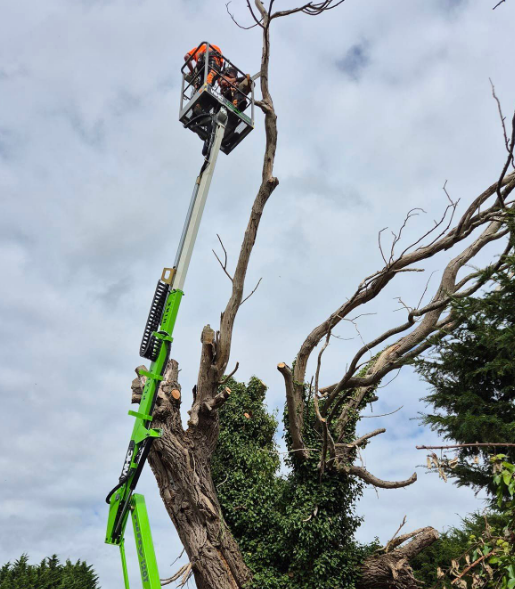
- Tree work and landscaping
Boom lifts and cherry pickers provide an efficient and safe way to work at height, particularly when navigating obstacles and complex environments. Their versatility makes them a popular choice across many industries.
You can learn more about when this type of equipment is most effective in our guide, 5 Reasons To Hire A Cherry Picker For Your Next Project.
Boom Lift Vs Other Access Equipment
When it comes to hiring any type of access equipment, it is critical to ensure the machinery is fit for purpose while providing a safe and efficient solution. Selecting the wrong machine can lead to project delays, increased costs, and a higher risk of accidents.
To make the right choice, it’s important to understand how boom lifts compare to other types of access equipment.
Boom Lifts
Boom lifts are best in class for reach and flexibility. Their ability to extend both vertically and horizontally allows operators to access tight, complex, or obstructed areas with ease, making them ideal for a wide range of construction and maintenance tasks.
Certain models, particularly articulated designs, can manoeuvre around obstacles, while others fitted with outriggers provide additional stability when working on uneven ground. This makes boom lifts a highly versatile solution across varied site conditions.
Scissor Lifts
Scissor lifts are a popular type of access equipment that operate with vertical-only movement. While this limits their positioning flexibility, they are often capable of lifting heavier loads due to their robust design.
This provides operators with a stable and spacious working platform that typically requires less repositioning during use. However, scissor lifts are generally best suited to flat, stable surfaces, unless a rough terrain model is used.
Choosing between these options ultimately depends on your site conditions, required reach, and the nature of the work being carried out.
Electric Vs Diesel Boom Lifts: Which To Hire?
Choosing between an electric or diesel boom lift largely depends on the working environment. Selecting the wrong power type can lead to reduced performance and may compromise operator safety if the equipment is used in unsuitable conditions.
To make the right decision, it’s important to understand which environments each type of boom lift is designed for.
Electric Boom Lifts
Electric boom lifts are best suited to environments where low emissions and quiet operation are required. For this reason, they are most commonly used indoors or within enclosed spaces. These machines typically operate on smooth, level surfaces and are ideal for applications such as maintenance work, installations, and facilities management within buildings.
Diesel Boom Lifts
Diesel boom lifts offer greater power and are designed to handle more demanding conditions. Their ability to operate on rough or uneven terrain makes them ideal for outdoor construction and maintenance projects. However, these machines are not necessarily suitable for indoor use or enclosed environments due to emissions and noise levels.
Hybrid Boom Lifts
For projects that involve both indoor and outdoor work, hybrid boom lifts can offer a highly flexible solution. These machines allow operators to switch between electric and diesel power modes depending on the environment, maximising efficiency while maintaining safety. Many hire services now offer hybrid boom lifts, enabling businesses to use a single machine across multiple job sites without compromise.
Selecting the incorrect type of equipment can lead to performance issues and safety risks, so it is essential to match the power type to the specific requirements of the job.
Boom Lift Hire Process
Hiring a boom lift is a quick and straightforward process, but getting it right requires clear planning and preparation. Follow these steps to ensure a smooth experience and avoid any delays:
Step 1: Determine Your Needs
Have a clear understanding of the height, reach, environment, and duration required for your project. Knowing your exact requirements ensures you select the right equipment from the outset.
Step 2: Choose the Right Equipment
Select the machinery type and size based on your project’s specific needs. Opting for a slightly larger or more capable machine can allow you to complete more tasks from a single position, improving efficiency.
Step 3: Request a Quote
Provide your supplier with all relevant details, including equipment type, duration of hire, and delivery postcode. This ensures the quote you receive is accurate and comprehensive.
Step 4: Open an Account
If you haven’t previously worked with the supplier, you may need to open a cash or trade account. Check the supplier’s website for specific requirements and options. Many hire providers can also guide you through the account setup process to make it as simple as possible.
Step 5: Prepare for Delivery
Ensure your site is accessible and ready to receive the equipment. Keep in mind that some delivery vehicles are larger than others, depending on the size of the machinery.
Step 6: Handover
During delivery, a member of the supplier’s team will provide a brief walkthrough of the equipment, covering essential operational and safety information to get you started.
Step 6: Handover
During delivery, a member of the supplier’s team will provide a brief walkthrough of the equipment, covering essential operational and safety information to get you started.
Step 7: Off-Hire
Once your work is complete, follow the correct off-hire procedure to prepare the equipment for collection by your supplier. This ensures the process is smooth and avoids any additional charges.
Following these steps ensures a hassle-free hire, but if you’re unsure which boom lift is right for your project, our team can provide expert guidance, a tailored quote, and support to help you get started.
Safety Considerations When Hiring
Safety should always be a top priority when hiring any type of access equipment, including boom lifts. While you do not need to present an operating licence to hire one, it is essential that all operators are competent and confident in using the machinery safely.
With that in mind, here are the key safety considerations you should prioritise when working at height:
Ensure All Operators Are Competent
All operators should be properly trained and certified to use access equipment. This not only protects the individual using the machinery but also reduces risk to others on site and helps safeguard your business.
Daily Inspections
Operators should carry out daily inspections of the equipment before use to ensure it is safe and functioning correctly. If any issues are identified, the equipment should not be used, and your supplier should be contacted to arrange a repair or replacement.
Use Appropriate PPE
Always adhere to the recommended personal protective equipment (PPE) outlined in the operator’s manual, along with any additional requirements based on the specific task being carried out.
Read the Operator’s Manual
Reading the operator’s manual before first use ensures you understand key safety procedures, operating guidelines, and emergency descent protocols should they be required.
Assess Site Conditions Daily
It is important to regularly assess site conditions, including ground stability and weather, as these can directly impact the safe operation of access equipment. This is particularly important when working outdoors or on uneven terrain.
Failing to follow proper safety protocols can lead to serious risks, accidents, and project delays. For a more detailed breakdown of regulations and best practices, see our guide: Cherry Picker & Scissor Lift Hire: Safety & Rules.
Get the Right Access Equipment For Your Project
Choosing the right boom lift can have a significant impact on the efficiency, safety, and overall cost of your project.
By understanding the different types of access equipment available and assessing your specific requirements, you can make a confident and informed decision. Taking advantage of flexible hire periods also allows you to align equipment with your project timeline, helping to maximise efficiency and control costs.
If you’re ready to explore your options, the team at WHC Hire Services can provide expert advice to help you avoid delays and ensure you get the right access equipment, exactly when and where you need it.
You can explore our full range of access equipment hire on our website or contact your local depot today to discuss availability and receive a tailored quotation.