Roller Features To Consider When Hiring Compaction Equipment
In today’s market, hiring just any roller for your compaction project simply won’t cut it. With such a wide range of roller models, specifications, and optional features available, it’s easy to overlook details that can make a real difference to performance on the ground.
Whether you’re tackling a driveway, compacting gravel, or preparing a sub-base for larger infrastructure work, the key to success is selecting a roller with the right features for the job. Getting this wrong can lead to poor finishes, remedial work, and a whole host of unnecessary costs.
That’s why we’ve put this article together — to break down the most important roller hire features to consider when choosing compaction equipment. By understanding what to look for, you can select the right machine and ultimately deliver the best results.
Why Roller Hire Matters For Successful Compaction
The demands of modern construction mean that hiring the right roller is about far more than convenience. It has a direct impact on the quality of work, the durability of the finished surface, and the level of productivity your team can achieve on site.
Using an unsuitable roller can result in material movement, uneven compaction, and even premature surface failure. That’s why it’s essential to look beyond the basics and consider the specific roller hire features available.
Professional roller hire from a reputable supplier provides access to purpose-built compaction equipment engineered to deliver consistent results. It also ensures the machinery is well maintained, safe to operate, and capable of meeting the demands of each individual project.
Understanding Different Types Of Rollers For Hire
Before comparing specific roller hire features, it’s important to understand the different types of rollers you can expect to hire on the market. Each roller design is built for a particular purpose, and choosing the right type from the outset makes feature selection far easier.
Pedestrian Rollers
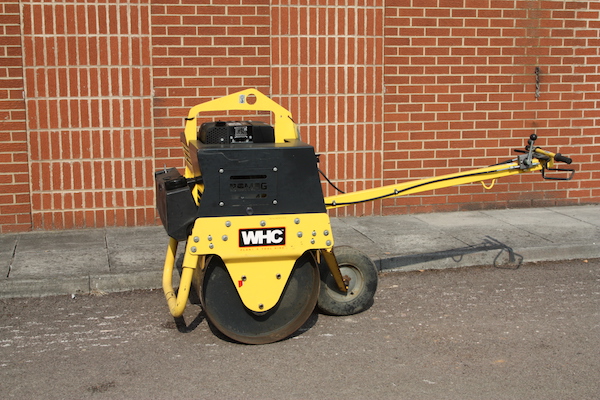
Pedestrian rollers are ideal for tight-access projects, edging work, and smaller areas where manoeuvrability is key. These machines typically house a single smooth drum, which, when passed over the working area, compacts the surface beneath. They are commonly used on driveways, footpaths, and confined spaces where larger rollers simply won’t fit.
Ride-On Rollers
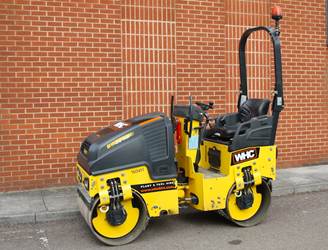
Ride-on roller designs are best for larger areas where productivity and coverage speed are essential. The term “ride-on roller” is a broad category covering several roller designs that allow the operator to ride on the machine during operation, improving efficiency and reducing operator fatigue on longer jobs.
Self-Propelled / Single Drum Rollers

Self-propelled rollers feature a single large front drum, supported by heavy-duty tyres at the rear. Due to their operating weight and high downward force, they best suit soil, hardcore, and sub-base compaction. These rollers thrive on groundwork and infrastructure projects where deep, effective compaction is required.
Tandem Rollers
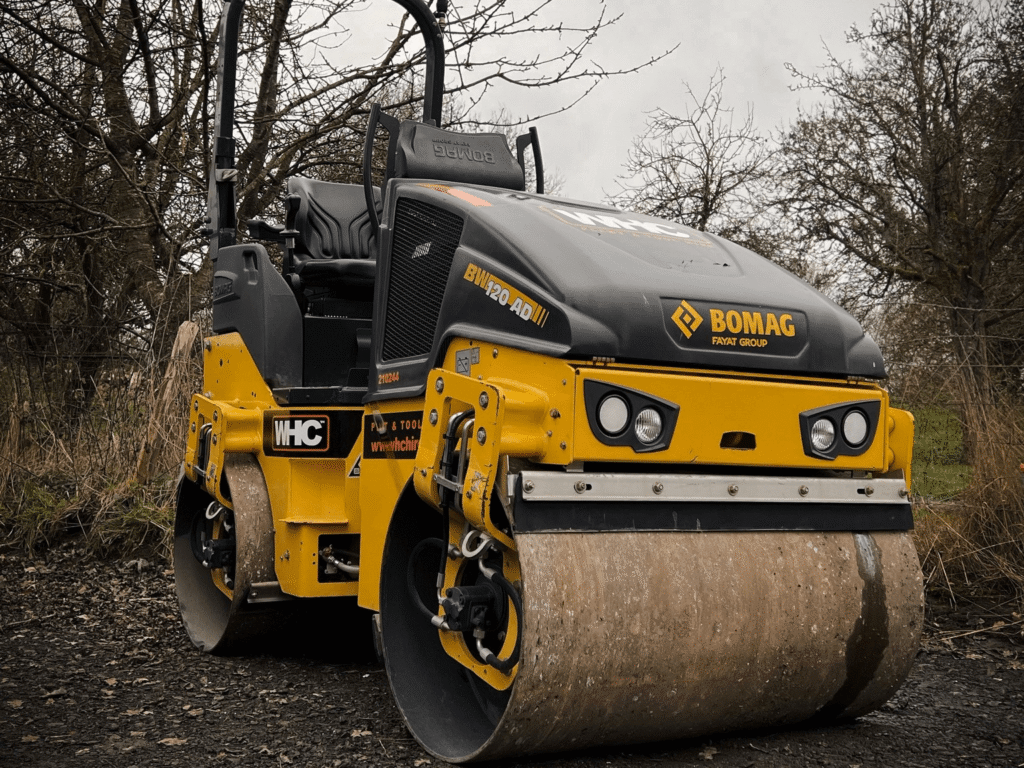
Tandem rollers are ride-on machines with smooth drums at both the front and rear. Their uniform weight distribution and smooth compaction finish make them particularly suitable for asphalt and bituminous surfacing.
Remote Trench Rollers (RT Rollers)
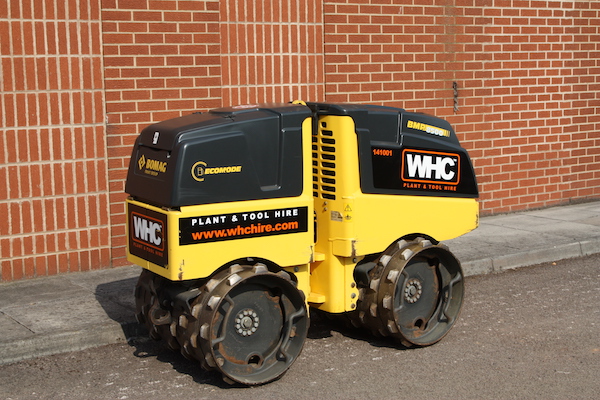
Remote trench rollers are a specialised type of compaction equipment designed for trench work and restricted areas. Operated via remote control, these machines typically use padfoot drums and deliver extremely high compaction forces in tight spaces.
Each type of roller has its own strengths depending on the application. For larger professional groundwork projects, understanding how to choose between tandem and self-propelled rollers can make a significant difference to both efficiency and finish quality.
Key Roller Hire Features To Look For
When comparing roller hire options, it’s vital to ensure you select the correct machine to carry out your compaction work. The right roller hire features can significantly improve productivity, compaction quality, and overall finish on site. Some of the key features to consider include the following:
Drum Width and Drum Design
A roller’s drum width and design have a direct impact on how quickly and effectively an area can be compacted. Wider drums are typically found on larger rollers and allow for faster coverage on open sites. Narrower drums, on the other hand, offer greater control and accuracy when working in confined or restricted spaces.
Drum design is equally important. Smooth drums provide a clean, uniform finish, while padfoot drums deliver more aggressive compaction and excel on cohesive soils. Selecting the right drum type for the material being worked on is essential for achieving proper compaction.
Operating Weight and Compaction Force
Operating weight is one of the most important roller hire features to consider. It directly affects the amount of pressure applied to the working surface, often measured as mass per metre of drum width. The greater the mass per metre, the higher the compaction force delivered.
Heavier rollers are more effective for dense materials and deeper compaction layers, making them ideal for groundwork and sub-base applications. Lighter rollers are often better suited to finishing work and smaller-scale projects where control and surface quality are more important than raw force.
Vibration System and Frequency Control
Most modern rollers available from specialist hire suppliers use vibration to improve compaction efficiency. Adjustable vibration settings allow the operator to match the roller’s performance to the material being compacted, helping to avoid over-compaction or surface damage.
Many roller designs can also be operated as a “deadweight” machine. This added versatility allows a single roller to be used across multiple stages of a project, making it a more flexible and cost-effective hire option.
Manoeuvrability and Steering
Features such as articulated steering, tight turning circles, and hydrostatic drive systems play a key role when working around obstacles or within restricted areas. Good manoeuvrability not only improves accuracy but also reduces operator fatigue, making long shifts safer and more productive.
Water Spray Systems
For capping layers such as asphalt, integrated water spray systems are essential. These systems prevent hot material from sticking to the drum, helping to achieve a smoother surface finish and reducing downtime during operation.
ECO Drive Modes
Some modern roller hire designs include ECO mode operation, which optimises engine performance to reduce fuel consumption and noise levels. This can be a major advantage on environmentally sensitive or noise-restricted sites, allowing efficient compaction while keeping running costs and disruption to a minimum.
Matching Roller Features To Your Needs
Not all projects require the same roller hire features. Choosing the right machine depends entirely on a few key factors that should always be considered before hiring:
- Material type – Different materials respond differently under pressure and vibration, meaning compaction methods can vary significantly.
- Surface size – The size of the working area should influence the size and drum width of the roller you select.
- Level of finish required – The stage of the build and the surface layer being compacted will determine the type of finish needed. In many cases, a range of rollers may be required to complete an entire project effectively.
Below are some common applications to help match roller features to your project needs:
Gravel and Sub-base Work
For gravel and sub-base applications, it is common to choose rollers with a higher operating weight and strong vibration output. These features help bind granular and stony materials together, improving density and reducing the risk of future movement or settlement.
Asphalt Compaction
When compacting asphalt, rollers fitted with smooth twin drums or tandem configurations are often preferred. Their even weight distribution and uniform rolling action help achieve consistent compaction and a high-quality finish across larger surface areas.
Landscaping and Residential Projects
For landscaping and residential applications, compact size and manoeuvrability are often prioritised. Smaller rollers allow operators to work accurately in tighter spaces while still delivering effective compaction for paths, driveways, and garden works.
Pairing the correct roller design and features to one or multiple applications throughout a hire period allows you to get the most value from your investment. If you’re looking for the best roller to tackle gravel, our roller guide offers further insight into achieving proper compaction and reducing the risk of future settlement or movement.
Size & Weight: Which Roller Works Best
Roller size should always match the scale of the project being undertaken. Hiring equipment that is too large can create access issues and reduce efficiency. While rollers that are too small may struggle to achieve the required level of compaction.
Below are some common applications to help guide roller size selection:
Smaller Rollers Are Best Suited To:
- Driveways
- Footpaths
- Patch repairs
- Landscaping projects
- Trench and confined access work
Larger Rollers Perform Best On:
- Long or wide driveways
- Car parks
- Large groundwork projects
- Pond construction
- Commercial and industrial sites
For domestic and light commercial work, choosing the best roller for driveways helps strike the right balance between compaction performance, ease of use, and site access.
Safety & Operator Comfort Features

Site safety and operator comfort have become key considerations in modern construction and groundwork operations. When hiring a roller for any type of compaction project, these factors should be included as part of your equipment selection process.
Reputable roller hire suppliers typically offer machines with a range of safety and comfort features designed to protect operators and improve productivity, including the following:
ROPS and FOPS Systems
Roll-over Protective Structures (ROPS) and Falling Object Protective Structures (FOPS) are designed to protect the operator in the event of a roll-over or impact. Some roller designs may be fitted with a full safety cabin, while others use a ROPS bar as a minimum level of protection.
Seatbelts
All modern rollers are fitted with seatbelts, which should always be worn during operation. Many manufacturers now incorporate safety systems that prevent the machine from operating unless the seatbelt is engaged, helping to enforce safe working practices on site.
See how a twin drum roller will not start without the seatbelt engaged below:
Low Vibration Controls and Ergonomic Seating
Some ride-on roller designs feature low-vibration controls and ergonomic seating to reduce operator fatigue and limit daily vibration exposure. These features are particularly important on longer hire periods or when rollers are in constant use throughout the day.
Air Conditioning and Cab Comfort
Rollers fitted with enclosed cabins often include air conditioning and heating systems that can be adjusted to suit operator preference. This allows the machine to be used comfortably in all weather conditions, improving concentration and consistency during operation.
These safety and comfort features help reduce fatigue, improve control, and ensure safe operation throughout the hire period. Choosing rollers equipped with these features can have a direct, positive impact on overall site productivity.
Hire Terms, Equipment Support & Condition
While many roller hire suppliers may offer similar machines from the same manufacturers, the real difference often lies in the quality of service and support. Reliable plant hire suppliers should provide low-hour, well-maintained machinery supported by documented maintenance systems, clear operating guidance, flexible hire durations, and responsive support when it’s needed on site.
When carrying out your own due diligence, it’s important to assess both the standard of the equipment and the level of service being offered. The machinery you hire reflects directly on the quality of your work, and ultimately, your own reputation. Choosing a hire partner you can rely on helps protect both project outcomes and professional credibility.
Choosing WHC Hire For Roller Hire
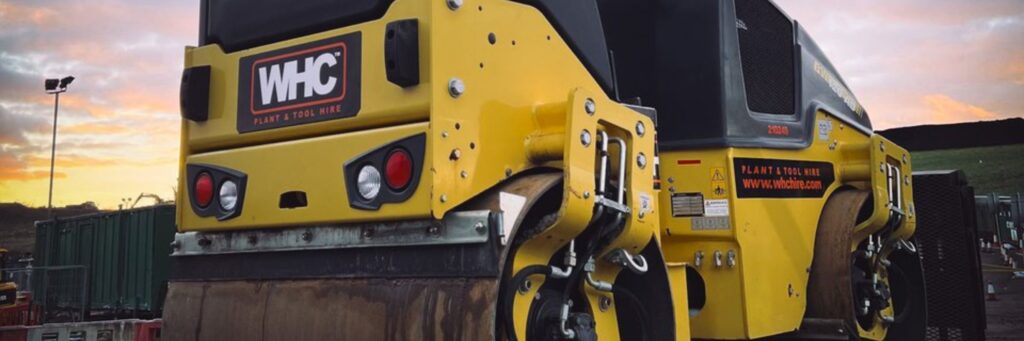
If you’re looking for a competitive roller hire supplier for your next compaction project, look no further than WHC Hire Services. Our modern Bomag roller fleet is backed by multi award-winning service and support, ensuring you have the right equipment and guidance every step of the way.
Get in touch with your local depot today or browse our roller hire stock list, complete with compaction guides to help you quickly and confidently select the right machine for the job.