
Selecting Rollers by Material and Project Phase

During any civils or infrastructure project, correct compaction is one of those stages that can either quietly go right or become visibly wrong. When it fails, it rarely shows signs immediately. Instead, it reveals itself later through settlement or surface failure, often when the cost of putting the job right is significantly higher than getting it right in the first place.
For that reason, selecting the right roller is not a simple matter of machine size or availability. It is a decision that contractors should not take lightly. It comes down to two key factors: the type of material you are working with and the phase of the project you are in. These two variables determine how compaction should be applied, and ultimately whether the required density and performance can be achieved.
On many groundworks, highways, and infrastructure projects, no single roller is suitable from start to finish. Different stages, or phases of a build, demand different compaction methods, which is why a considered approach to roller hire becomes essential. Rather than adopting a single machine approach, experienced contractors will match equipment to each phase, ensuring efficiency on site and reducing the risk of remedial work.
Understanding The Role Of Rollers On Site
A roller’s primary function is to compact material by reducing air voids and increasing surface density. While the process sounds straightforward, the force required can vary significantly depending on the size and type of roller being used.
In simple terms, the heavier the roller, the greater the force that can be applied.
Some machines rely purely on static weight, whereas others introduce vibration to achieve deeper compaction. There are also rollers designed with specialist drums that manipulate material through a kneading action, rather than relying solely on downward pressure.
This becomes particularly important when working across different ground conditions. Materials behave differently under load. Granular materials, for example, respond well to vibration, settling into a dense formation relatively quickly.
Cohesive soils, such as clay, behave very differently. They require manipulation to remove air and moisture through a kneading action. Without the correct type of roller, achieving adequate compaction can be difficult, regardless of how many passes are completed.
From a practical point of view, this means that choosing the right roller directly influences productivity on site. Using the correct machine ensures:
- Compaction can be achieved in fewer passes
- Fuel consumption is reduced
- Work can be completed more efficiently
- Overall hire costs are kept under control
The wrong machine, on the other hand, can slow progress considerably and introduce quality risks that may lead to remedial work later in the project.
The Main Types Of Rollers & Where They Are Used
Across most civils and groundworks projects, a small number of roller types are commonly used. Each one is suited to specific materials and working conditions that contractors are required to manage on-site.
Smooth Drum Rollers
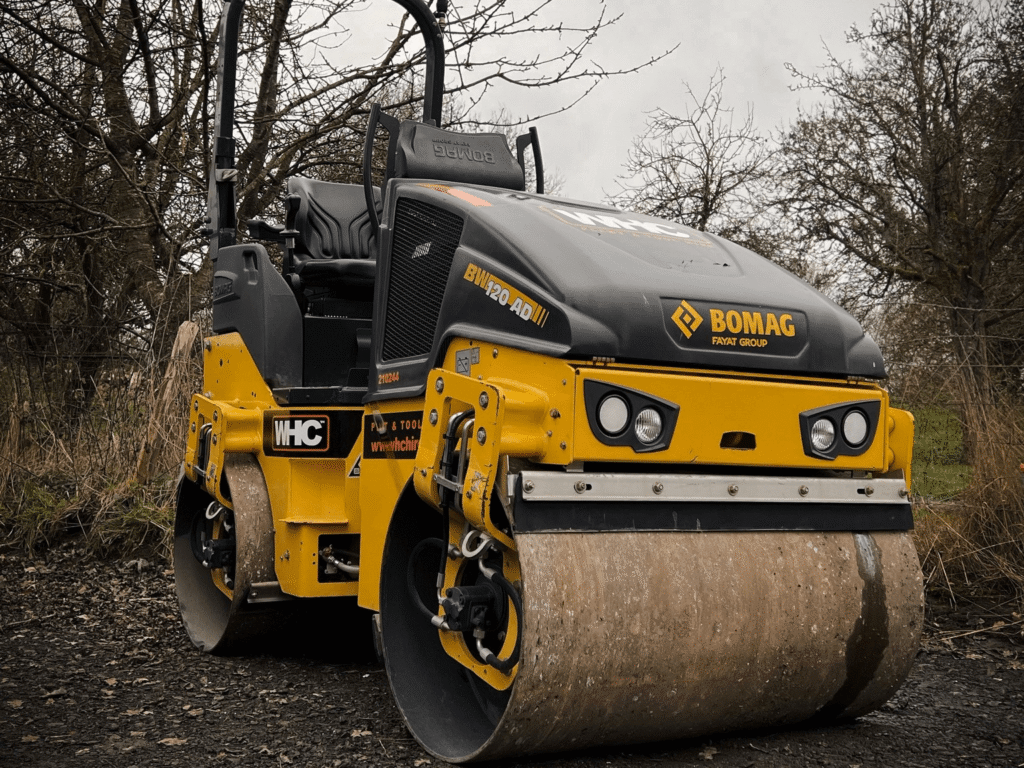
This type of roller is typically used where a uniform finish is required, particularly on granular materials and asphalt. Their ability to operate with vibration or as a static weight makes them a versatile option across multiple phases of work. For a more detailed breakdown, see Smooth Drum Roller Hire: A Complete Guide For Construction Projects.
Padfoot Rollers
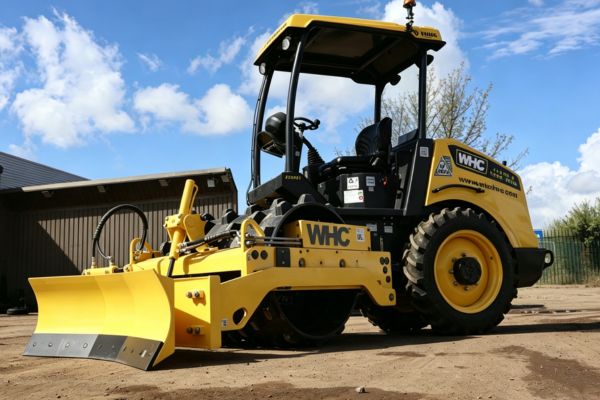
Padfoot rollers, often referred to as sheepsfoot rollers, are designed for working with cohesive materials such as clay and silt. The padfoot drum penetrates the surface and works the material beneath, making them highly effective during earthworks and sub-base preparation.
For a more detailed comparison between these two machines, refer to your supporting article on smooth and padfoot rollers.
RT Rollers
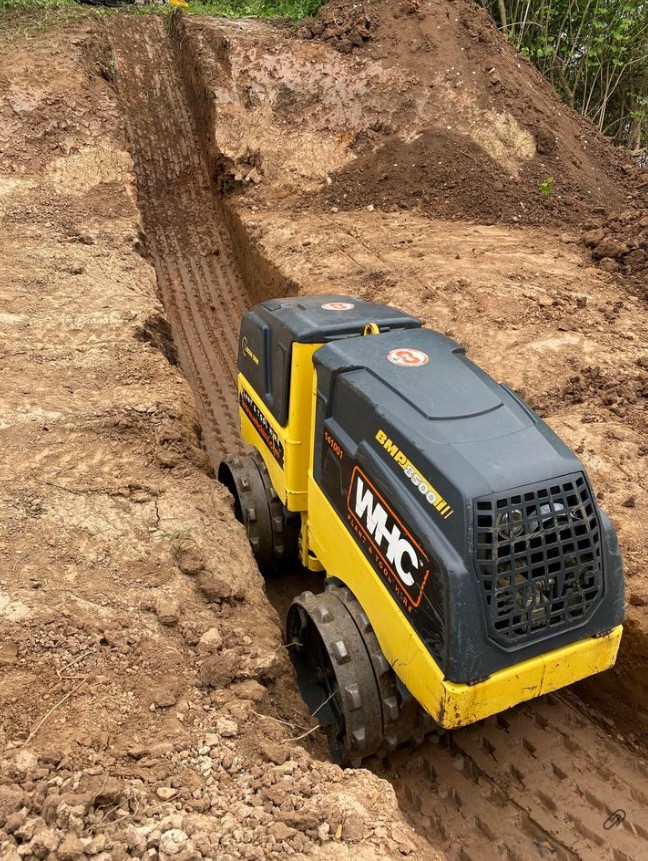
In more confined areas such as utility trenches or restricted access sites, RT rollers provide a safe and practical solution. They allow compaction to be carried out while the operator remains at a safe distance, reducing the need for personnel to enter potentially hazardous areas.
Selecting Rollers By Material Type
It is important to recognise that material type is one of the most critical factors when selecting the correct roller for any compaction task. Each material behaves differently under load, which means equipment must be chosen carefully to achieve the required density and performance.
Cohesive Soils
Cohesive soils retain moisture and resist compression when compacted using static weight alone. In these conditions, a kneading action is required to remove air pockets and improve density at depth.
Padfoot rollers are typically the most effective choice. On larger sites, heavier machines such as 7-tonne rollers can provide the force needed to achieve deeper compaction, while RT rollers are often preferred for confined areas such as trenches.
Attempting to use a smooth drum roller in these conditions will usually result in surface compaction only, leaving weaker material beneath.
Construction Aggregates
Construction aggregates used within sub-base layers, such as MOT Type 1 and recycled materials, are generally granular in nature. However, they can vary significantly in grading, moisture content, and consistency depending on the source and application.
Because of this variation, compaction is not always as straightforward as with standard granular materials. Achieving the required density depends on selecting a roller that can apply consistent force while allowing the material to settle and interlock effectively.
In most cases, smooth drum vibratory rollers are the preferred choice when working with construction aggregates. The use of vibration helps move and reposition particles, allowing them to compact tightly and form a stable base.
Where aggregates are laid in thicker lifts, or where moisture content is less controlled, heavier rollers may be required to achieve compaction at depth. It is also important to follow the manufacturer’s compaction guidelines to ensure consistent and long-lasting results.
Granular Materials (Sand and Gravel)
Granular materials such as sand and gravel behave in a similar way to construction aggregates, relying on particle movement rather than manipulation. Vibration plays a key role in achieving effective compaction, allowing particles to settle quickly into a dense and stable formation.
In most scenarios, smooth drum vibratory rollers or tandem rollers provide the best results when working with these materials. Using a padfoot or trench roller in these conditions is less efficient and may lead to surface disruption rather than effective compaction.
Asphalt and Bituminous Materials
Asphalt requires a more controlled approach, where both timing and technique influence the final result.
Smooth drum or tandem rollers are typically used throughout, but their operation will vary depending on the stage of compaction. Rollers should be fitted with a water suppression system to prevent material from sticking to the drum and to maintain a consistent finish.
Temperature, vibration settings, and rolling sequence must all be carefully managed to achieve the required surface quality.
For a more detailed breakdown, see Best Compaction Rollers to Hire for Asphalt Surfacing.
Mixed Or Stabilised Materials
Where materials are mixed or stabilised, which is common across most construction projects, a combination of compaction methods is required. These materials do not respond consistently to a single approach, particularly where different layers or treatments have been applied.
At the sub-base level, initial passes are usually carried out using a padfoot roller to achieve depth and stability. This is then followed by a smooth drum roller to refine the surface and deliver a consistent finish.
This highlights a key point for contractors. Material conditions often change throughout a project, and relying on a single machine is rarely sufficient. Matching the roller to both the material and the stage of the works is essential, which is explored further in the project phase section.
Selecting Rollers By Project Phase

While material selection is important, compaction requirements also change as a project progresses. Selecting the right roller at each stage ensures that density, stability, and surface quality are achieved throughout the build.
Earthworks and Sub Base Preparation
At this stage, the primary objective is to achieve density at depth and create a stable foundation. This reduces the risk of subsidence or settlement later in the project.
Padfoot rollers are commonly used where cohesive soils are present, as they help establish a firm and stable base to build from. At this point, surface finish is less important than achieving the required structural integrity.
Utility Trenches
During the installation of utilities, compaction is typically carried out in confined areas such as trenches or during backfilling.
Backfill materials require consistent compaction to prevent future settlement. Achieving this within narrow trenches or around pipework calls for equipment that can operate efficiently while maintaining safety on site.
RT trench rollers are well suited to this type of work, allowing compaction to be carried out remotely while maintaining control and reducing risk to operators.
Base Layer Construction
As work progresses, the focus shifts to creating a consistent and stable base for subsequent layers. Depending on the final specification, this may involve multiple layers that require uniform compaction throughout.
To achieve this, contractors often use larger self-propelled vibratory rollers. These machines provide the weight and vibration needed to compact construction aggregates efficiently and create a strong, load-bearing platform.
Asphalt Compaction Stages
Asphalt compaction is carried out in a sequence of stages, each requiring a controlled approach.
Initial breakdown rolling is performed while the material is still at a high temperature, often using vibration to achieve early density. This is followed by intermediate rolling, which further consolidates the material.
Final passes are then completed without vibration, typically using tandem or pedestrian rollers, to produce a smooth and uniform finish.
The Importance Of Sizing The Roller Correctly
Selecting the correct type of roller is only part of the decision. Size and weight also play a key role in matching the scale and conditions of the project. The right machine must be suited not only to the material, but also to site access and the overall scope of the work.
Smaller Sites and Restricted Access
On construction sites where access is limited, or where work is carried out in confined areas, smaller rollers often provide the most practical solution.
Pedestrian rollers and RT trench rollers are commonly used in these conditions, as they offer the control needed to operate safely while still delivering effective compaction. These machines are particularly suited to utility works, drainage projects, and areas where larger equipment cannot manoeuvre.
Medium-Scale Projects
For general groundworks and mid-sized infrastructure projects, mid-weight smooth drum rollers offer a strong balance between performance, speed, and manoeuvrability.
These machines are capable of handling a range of materials while remaining practical to operate across varying site conditions. Both smooth and padfoot drum configurations are often available, allowing contractors to match the machine to the material being compacted.
Large Infrastructure Projects
On larger projects, particularly those involving significant earthworks over wider areas, heavier rollers are required to achieve compaction at depth.
Machines in the 7-tonne class and above provide the weight and force needed to improve compaction in deeper layers and reduce the number of passes required. However, their use must still be considered in relation to site access and underlying ground conditions. These machines are available with both smooth and padfoot drums, depending on the application.
Factors Influencing Compaction Performance
Even with the correct size roller in place, site conditions and equipment standards will influence the quality of the final result.
Moisture
Moisture content plays a significant role, particularly in cohesive soils where too much or too little water can prevent effective compaction. Achieving the correct balance is essential to ensure the material responds properly under load.
A simple on-site method, such as the squeeze test, can provide a quick indication of whether moisture levels are suitable before work begins.
Layer Thickness
Layer thickness must be carefully controlled when placing new or imported materials on site. Attempting to compact excessive thickness in a single pass will often result in insufficient density below the surface.
Following the manufacturer’s compaction guidelines is essential to ensure that each layer achieves the required strength and stability.
Equipment
The performance of a roller can vary depending on the manufacturer, machine condition, and technology used. Factors such as mass per metre and vibration capability will influence how effectively compaction is achieved.
Where possible, hiring modern and well-maintained equipment will improve consistency on site and help deliver better overall results.
Common Mistakes When Hiring Rollers
Even experienced contractors can make mistakes when hiring rollers, particularly when projects are under time pressure. These decisions often lead to inefficiencies and complications later in the build.
Keeping the following points in mind when selecting equipment can help avoid unnecessary issues on site.
Using One Roller for Every Phase
Attempting to use a single type of roller across every phase of construction may appear cost-effective at the outset, but it rarely delivers the best results. Different stages require different compaction methods, and overlooking this often leads to poor performance and additional work later in the project.
Material Behaviour
It is essential to select equipment based on the material being compacted. Different materials respond differently under load. Some will rearrange easily with vibration or static weight, while others require a kneading action to achieve effective compaction.
Failing to match the roller to the material reduces efficiency and can result in inconsistent compaction across the site.
Choosing Based on Availability
Hiring rollers based solely on immediate availability, rather than suitability, can create unnecessary challenges on site and introduce additional risks.
Taking the time to select the correct machine from the outset and booking equipment well in advance. This helps ensure the right roller is available when needed and reduces the likelihood of delays.
Making The Right Roller Hire Decision
Selecting the right roller hire comes down to understanding your project requirements and matching the equipment accordingly. Considering the material, phase of construction, and site conditions is essential, rather than relying on a single solution.
For most contractors, the flexibility of hiring allows them to adapt to changing requirements across a project. This provides access to the right equipment at the right time, ensuring compaction is carried out efficiently and to the required standard.
If you are unsure which roller is best suited to your project, speak to the team at WHC Hire Services, who can help you make the right decision from the outset. Getting this right early reduces delays, improves efficiency on site, and helps avoid unnecessary costs later in the build.