Smooth Drum Roller Hire: A Complete Guide For Construction Projects
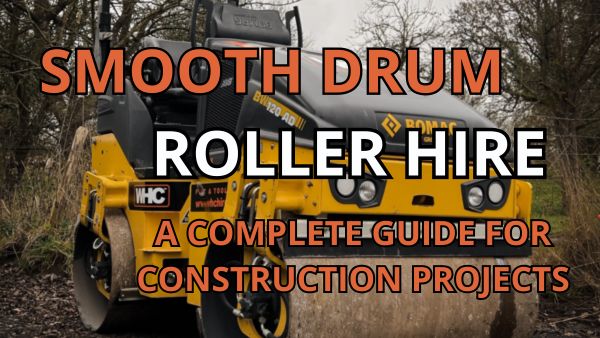
Smooth drum rollers are one of the most commonly hired pieces of compaction equipment used across the construction industry. From civil engineering projects to landscaping and driveway construction, they play a vital role in stabilising long-lasting surfaces.
These rollers are typically used to compact granular materials while producing a high-quality, smooth finish. This includes materials such as crushed stone and finishing capping layers like asphalt.
Therefore, if you are planning a groundworks project of any scale, it is highly likely that you will require a reliable method of achieving professional levels of compaction. Hiring a smooth drum roller can be a simple and cost-effective way to deliver these results without having to invest in expensive machinery.
In this complete guide, we’ll explain when to hire a smooth drum roller, the types of machines available and their best applications, along with the key factors that can affect the cost of hiring.
What Is A Smooth Drum Roller
A smooth drum roller is a type of compaction machine used to compress materials such as granular soils, gravel, crushed rock and asphalt (depending on the machine design). These compactors use the downward pressure of one or two large steel drums to apply force evenly across the working surface, leaving the ground uniform and ready to support further construction.
Many smooth drum rollers also include vibration systems that help force out trapped air between ground particles, allowing materials to settle and compact more efficiently.
Smooth drum rollers are most effective when working with non-cohesive materials, including:
- Gravel
- Sand
- Crushed stone (Type 1 MOT)
- Road planings (recycled bituminous material)
- Asphalt
Because smooth drum rollers distribute pressure evenly across the surface, they are commonly used in the construction of roads, foundations and large landscaping projects where a stable and consistent base is required.
When Should You Hire A Smooth Drum Roller?
Smooth drum rollers are used across a wide range of construction tasks and project phases. They often support sites from the moment new materials are introduced. Helping to achieve consistent and uniform compaction, particularly where ground stability and load-bearing capacity are key.
Some common applications include:
Road & Highway Construction
Smooth drum tandem rollers are widely used to compact asphalt and other sub-base materials to create durable road surfaces.
Foundation Preparation
Many construction projects require the compaction of existing soil before foundations are poured. When operating on non-cohesive materials, a smooth drum roller is often the ideal choice. However, when working with cohesive materials such as clay, a padfoot roller produces superior results.
Driveways & Car Parks
Contractors commonly use rollers to compact Type 1 MOT, hardcore and asphalt to ensure a smooth and even finish. The smooth drum design helps deliver a clean, uniform surface.
Landscaping & Groundworks
Large landscaping projects often require soil compaction to prevent future settling. This can include pathways, patio areas and even the installation of artificial turf.
Smooth drum rollers are often hired across several different phases of construction. The flexibility of equipment hire allows businesses to maximise productivity when compaction equipment is required.
Types & Sizes Of Smooth Drum Rollers Available To Hire
Smooth drum rollers are available in a range of different sizes and designs to support various types of construction work. Understanding the differences between these machine types is important to ensure you choose the most suitable roller for your specific application.
Pedestrian Smooth Drum Rollers
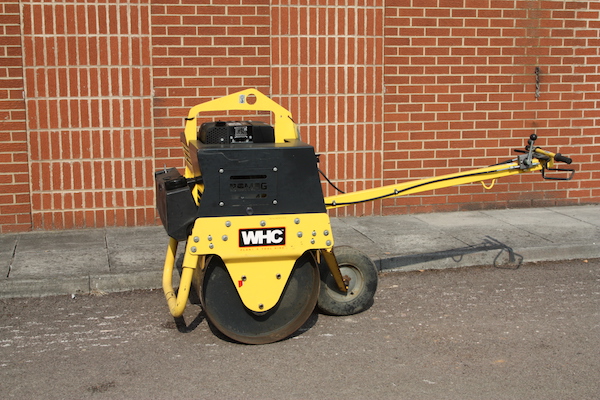
These single-drum rollers are designed for operation in tight spaces where manoeuvrability is important. They are the smallest smooth drum rollers available for hire and usually weigh up to around 500 kg, depending on the manufacturer.
Pedestrian rollers are ideal for compacting small areas such as:
- Driveways
- Footpaths
- Landscaping projects
- Small urban construction sites
Their compact size allows operators to achieve effective compaction in areas where larger ride-on machines would struggle to access.
Twin Drum / Tandem Rollers
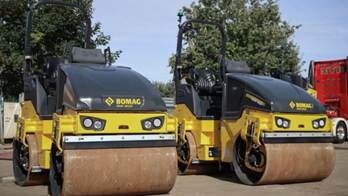
Tandem rollers are the most commonly used smooth designs on construction projects, offering a strong balance between compaction performance, speed and productivity.
These machines operate using two steel drums, one at the front and one at the rear. This enables them to compact and finish surfaces evenly while leaving a clean and uniform finish across the working area.
Tandem rollers are particularly well-suited for:
- Asphalt compaction
- Road bases
- Large driveways
- Car parks
Weighing in at between 1,500 kg and 3,000 kg, these machines deliver significantly greater compaction force compared to pedestrian rollers due to their higher operating weight and increased mass per metre of drum width.
Self-Propelled Large Rollers

The largest smooth drum rollers available for hire are self-propelled single-drum rollers. These machines feature a large, smooth steel drum at the front of the machine with rubber tyres at the rear.
Because of this design, they are generally not used for final asphalt finishing. However, they are highly effective for compacting granular materials such as crushed stone, gravel and sub-base layers.
The rear tyres also provide additional traction, allowing these rollers to operate efficiently on rough or uneven ground where tandem rollers may struggle.
Self-propelled rollers are commonly used on large-scale projects such as:
- Highway construction
- Airport runways
- Major infrastructure developments
Due to their size and operating weight, these machines deliver high compaction output and are capable of compacting thicker material layers in fewer passes. Expect machine sizes to range between 3000kg and 20 tons.
Key Considerations When Hiring A Smooth Drum Roller?
Not all rollers are suited to the same application. Selecting the correct machine can have a significant impact on your project’s efficiency and ultimately the overall cost of hire.
Before booking your smooth drum roller hire, you should consider the following features:
Operating Weight
The heavier the roller, the greater the compaction force it can deliver. This has a direct impact on the depth of material layers you’ll be able to compact effectively.
Drum Width
The wider the roller drum, the fewer passes it will take to cover the working area. However, you should always consider site access points that may prevent you from using a larger machine.
Vibration Settings
Vibration systems are now standard on most modern roller types. However, some machines offer adjustable vibration settings, allowing operators to increase versatility and optimise performance across different materials and projects.
Manoeuvrability
On tight-access job sites, having a machine with good manoeuvrability can make operations smoother and significantly safer. Consider models that feature articulated steering for improved control in confined areas.
Operator Comfort
Operating a roller for long periods can be tiring, so it’s important to ensure the machine includes adequate operator comfort and safety features to support staff and reduce fatigue.
For a more in-depth look at the features you should consider when hiring a roller, read our guide on roller features to consider when hiring.
Smooth Drum Vs Padfoot Rollers – Which Do You Need?
While smooth drum rollers offer superior compaction for granular materials, other rollers available for hire may be better suited to different soil types.
For example, padfoot or “sheepsfoot” rollers are designed for cohesive soils such as clay, loam and silt, where a deeper kneading action is required to achieve effective compaction.
Smooth drum rollers work best when your project requires:
- Surface compaction of granular materials
- Asphalt finishing
- Gravel or imported aggregate compaction
- Crushed stone compaction for driveways
- Smooth, even surface finishes
If you are unsure which machine will be best suited to your project, you can read our full breakdown of smooth vs padfoot rollers.
How To Choose The Right Smooth Drum Roller For Your Project?
Before you hire a smooth drum roller, it is essential to choose the right machine for the task at hand. Incorrect selection could delay your project and cost far more than just additional hire fees.
Choosing the right smooth drum roller depends on several factors:
Material Type
Both self-propelled and tandem-style smooth drum rollers are suitable for granular materials and crushed stone. However, when working with asphalt, self-propelled rollers are not recommended, as their rear tyres can damage the finished surface.
Project Size
Larger rollers can complete compaction tasks faster, provided site access allows. It’s important to consider the roller’s drum width to estimate overall compaction time across the project.
Compaction Depth
Knowing the depth of compaction required allows you to select a roller that is capable of achieving it. Each roller size has a maximum compaction layer depth. On larger infrastructure projects, this can be a critical factor in determining which smooth drum roller is best suited.
Site Access
Smaller rollers may be necessary for confined areas or urban construction sites. Identify potential access issues before hiring, and consider the machine’s width, height, and length to ensure it can operate safely on your site.
Selecting the correct roller can have a significant impact on the overall efficiency of your compaction tasks. The right choice can save fuel and hire costs while keeping your project on schedule.
If you’re still unsure which roller is right for your project, speak to a reputable roller hire supplier who can guide you toward the best machine for your specific needs.
Smooth Drum Roller Hire Costs
Smooth drum roller hire costs can vary depending on several factors, including:
Machine Size
The larger the machine, the higher the hire cost is likely to be. It’s important to strike a balance between size and efficiency to ensure the roller meets your project needs without unnecessary expense.
Hire Duration
The longer the hire period, the higher the overall cost. However, many suppliers offer favourable rates for long-term hire.
Delivery Charges
Most roller hire costs are quoted without delivery. Transport fees vary depending on the distance from the supplier to your site, so always factor this into your budget.
Equipment Age
The age of the roller can affect pricing. Lower rates often indicate older or outdated machines, while competitive rates usually reflect more modern, well-maintained equipment. Nevertheless, always do your homework.
Supplier Support
Not all hire companies provide the same level of support. Some suppliers offer access to in-house engineers or mobile support teams, which can be invaluable if issues arise on site. This additional support is often reflected in the overall hire cost.
Fuel Cost
Fuel charges are typically not included in the standard hire rate. Many companies charge extra for refilling tanks, which can add to the total cost. Refuelling the roller before returning it can sometimes save a small amount on hire charges.
When requesting quotes for smooth drum roller hire, make sure you receive adequate equipment and service to meet your project requirements. Choosing the right supplier and machine can save both time and money while ensuring high-quality compaction results.
Benefits Of Hiring A Smooth Drum Roller
Unlike the burden of purchasing your own equipment, hiring a smooth drum roller offers several advantages:
Lower Upfront Costs
Hiring eliminates the large capital investment required to purchase your own machinery, allowing businesses to access professional equipment without tying up significant funds.
Access to Modern Machinery
Reputable hire companies maintain and regularly upgrade their fleet, ensuring you have access to well-maintained, reliable machines with the latest features.
Flexible Hire Terms
Flexible hire durations allow you to pay only for the time you actually use the machine. This avoids unnecessary downtime costs when equipment would otherwise be inactive or undergoing maintenance.
Reduced Maintenance Fees
When you hire a smooth drum roller, servicing and maintenance are typically included in the hire fee, removing the need for in-house upkeep.
For many contractors working in the fast-paced construction industry, hiring a smooth drum roller is a practical and efficient way to access specialist equipment without the long-term costs and responsibilities of ownership.
How To Hire A Smooth Drum Roller With WHC Hire Services
Hiring a smooth drum roller with WHC Hire Services is a straightforward process:
- Identify the roller size you require from our modern fleet.
- Open a trade or cash account with one of our team members.
- Confirm delivery and collection arrangements.
- Pay a security deposit (for cash accounts).
- Book the machine for your project dates.
With a large range of compaction equipment available, your local WHC Hire depot can often deliver the equipment you need to site within a few hours or by the next working day, depending on availability.
If you are planning a construction, surfacing, or landscaping project, hiring a smooth drum roller ensures you have the right equipment to achieve efficient and reliable compaction.
Get in touch with your local WHC Hire depot to discuss a personalised quote for your project today, or browse our roller hire equipment to find the right machine for your needs.