Smooth Vs Padfoot Rollers: Everything You Need To Know
If you’re carrying out any type of civil engineering, construction, or earthworks project, choosing the right compaction equipment is vital to its success. One of the most common questions we hear is: “Should I use a smooth or padfoot roller?”
While both types of compaction machinery are designed to work with soils and other foundation materials, the way they operate is very different, and each is suited to specific ground conditions. Choosing the wrong equipment can result in poor compaction, inefficient project management, and — more often than not — costly remedial work.
In this WHC Hire guide, we’ll break down the key differences between smooth and padfoot rollers, explain how each type works, highlight where they perform best, and give you a clear baseline to help you select the right machine for any project.
What Are Smooth & Padfoot Rollers?
Before diving into performance comparisons, it’s important to understand the basic design and purpose of each type of roller. This knowledge will help you quickly identify the machines on site without second-guessing yourself.
What Is a Smooth Roller?
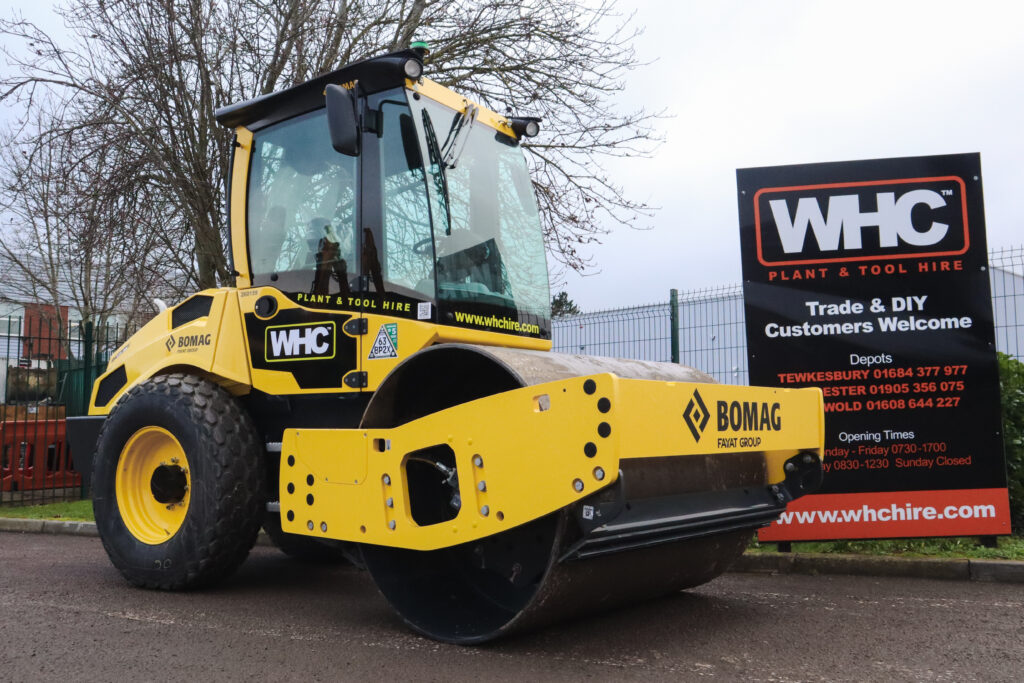
Smooth rollers, also known as smooth drum rollers, feature a flat steel drum at the front that applies uniform pressure across the surface. Designs vary from self-propelled models with a single front drum to tandem models, which have both front and rear drums.
Depending on the model and manufacturer, these rollers can be static, vibratory, or both, with most modern machines offering the option to use either mode.
Smooth rollers are commonly used for:
- Asphalt compaction
- Granular soils such as sand and gravel
- Final finishing layers (capping layers) where a smooth surface is required
Smooth drum rollers are often favoured when surface appearance and even compaction are priorities — for example, on highways or paved areas.
What Is a Padfoot Roller?

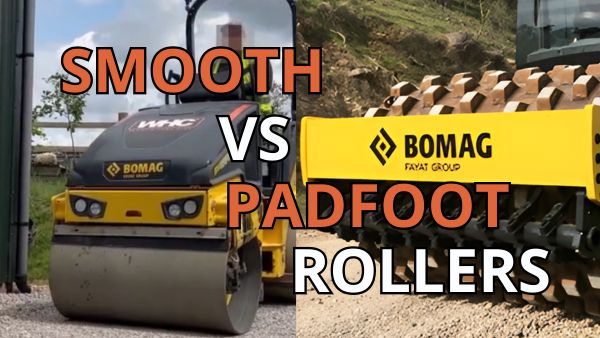
Padfoot rollers, sometimes called sheepsfoot rollers, have drums covered in raised rectangular or tapered pads (feet). This design allows the roller to concentrate a large amount of force into small contact points, effectively kneading the soil.
Most padfoot rollers are self-propelled, with a front roller and tractor-type rear wheels. There are exceptions where both the front and rear are fitted with padfoot drums — for example, on remote trench rollers.
Padfoot rollers are used for:
- Cohesive soils such as clay and silt
- Earthworks and subgrade preparation
- Projects requiring deep compaction
Due to their design and the kneading action of their drums, padfoot rollers are not intended for finishing surfaces.
Want to explore padfoot rollers in more detail? Check out our guide: “What Is a Padfoot Roller.”
How Roller Compaction Works
Now that we understand the key differences between smooth and padfoot rollers, it’s important to look at how roller compaction works. This helps explain why each roller performs differently under various conditions.
Static vs Vibratory Compaction
If you’re hiring or purchasing a modern roller, you’re in luck — most current designs offer both static and vibratory settings, allowing operators to use the machine across a wide range of applications.
However, the way each roller uses these modes differs:
- Smooth rollers rely heavily on vibration combined with the downward force of the drum’s contact with the surface.
- Padfoot rollers use vibration to drive the pads deeper into the soil, squeezing air pockets out of lower layers and achieving deeper compaction.
Why Drum Design Matters
Choosing the right drum design is essential for the type of material you are working with:
- Smooth drums compact material from the top down, making them ideal for granular soils that rearrange and settle easily.
- Padfoot drums compact from below the surface, kneading cohesive soils and breaking down air pockets that smooth drums can’t reach.
For a closer look at roller compaction, see our other article, “What is roller compaction?”
Smooth Vs Padfoot Rollers: Soil Types & Best Uses
One of the biggest factors that will influence the type of roller you choose is the soil or material type you’re working with. It’s essential to remember that not all rollers are suitable for the same materials.
If you’re ever unsure which roller to use, it’s always a good idea to consult a professional hire service for guidance.
Best Soil Types For Smooth Rollers
Smooth rollers excel at compacting granular materials such as sand, gravel, limestone, and asphalt. These materials are non-cohesive, meaning their particles don’t stick together or form clumps, making them ideal for the flat, even pressure of a smooth drum.
Best Soil Types For Padfoot Rollers
Padfoot rollers, on the other hand, are designed for semi-cohesive soils, where particles stick together, such as clay, silt, and mud. This makes them particularly effective for compacting soils on sites with high water tables, or near dams and other bodies of water.
It’s important not to use a roller on a soil type it wasn’t designed for. The raised pads of a padfoot roller will churn granular soils instead of flattening them, while smooth drums cannot provide enough force to properly compact semi-cohesive soils. In that case, the material will stick to the drum and compact unevenly.
Using the right roller for the soil type ensures efficient compaction, a stable surface, and minimal rework.
Smooth Vs Padfoot Rollers: Performance & Practical Differences
Beyond a roller’s suitability for different soils, there are several practical differences that affect performance on site when comparing smooth and padfoot rollers. These factors are essential to consider when deciding which design to invest in or hire.
Compaction Depth
For many construction projects, understanding compaction depth and effectiveness is crucial for achieving efficient and long-lasting results. The depth a roller can compact often has a significant influence on the type of machine you choose.
For deep compaction, such as when working in lower soil layers or raising the overall height of a construction, padfoot rollers provide superior results. Their kneading action allows them to compress soil at depth, removing air pockets and ensuring stability.
For shallow or finishing layers, such as bedding in stone or laying asphalt capping layers, smooth rollers deliver sufficient force and are ideal for creating an even surface.
Surface Finish
When surface aesthetics are important, smooth rollers leave a uniform, flat, and even finish, making them perfect for trafficable surfaces, paving, and other finished layers.
Padfoot rollers, by contrast, leave behind imprints of their raised pads, resulting in a textured, uneven surface. These surfaces are typically followed up with passes from a smooth drum roller if a finished appearance is required.
Manoeuvrability and Efficiency
Smooth drum rollers are generally faster and easier to manoeuvre, particularly on hard, flat surfaces. While they may not achieve the same deep compaction rates as padfoot rollers, they excel at surface work and finishing layers.
Padfoot rollers, on the other hand, deliver superior compaction results in challenging soil conditions. They are particularly effective in cohesive soils, though they may be slower and require more careful handling on certain surfaces.
Benefits Of Using A Padfoot Roller
Using a padfoot roller for your construction or civil engineering project offers a wide range of benefits.
Effective Compaction of Cohesive Soil
The roller’s specialised feet knead cohesive soils, increasing density and preventing material from sticking to the drum. This makes padfoot rollers highly effective for clay, silt, and other semi-cohesive materials.
Larger Compaction Surface Area
Each foot on the padfoot drum creates additional contact points, concentrating pressure through these points. This design improves overall compaction and ensures soil is evenly compressed across the surface.
Superior Traction
Padfoot roller drums force cohesive soils to clump together, creating a non-level compacting surface. The drum design helps pull the machine forward, maximising traction and making it ideal for uneven or challenging terrain.
Versatility
The kneading motion of the drum enhances both static and vibratory compaction mechanisms found on modern rollers. This makes padfoot rollers versatile across different soil conditions and project requirements.
Ideal for Large-Scale Work
Padfoot rollers are particularly suited to large construction projects, enabling deep compaction. This allows contractors to work in thicker soil layers efficiently, resulting in more effective ground preparation.
Benefits Of Using Smooth Drum Rollers
Using a smooth drum roller for your construction or civil engineering project also provides a wide range of benefits.
Effective Compaction of Granular Soils
Smooth drum rollers excel on granular and non-cohesive materials. Their downward force flattens particles and eliminates air pockets between materials and aggregates, creating a stable and dense surface.
Efficient Compaction of Large, Shallow Areas
Smooth drum rollers distribute uniform force evenly across the drum, allowing them to compact larger, shallow areas more effectively than padfoot rollers. This makes them ideal for projects where wide, even coverage is required.
Create a Smooth, Even Finish
For level, polished surfaces, smooth drum rollers are the superior choice. They are commonly used on roads, pavements, and commercial projects where a flat, professional finish is essential.
Limitations of Padfoot Rollers
While padfoot rollers excel on cohesive soils that require kneading and deep compaction, there are some limitations to be aware of:
Unsuitable for Finishing Surfaces
The design of padfoot rollers makes them unsuitable for finishing surfaces such as asphalt. Using a padfoot roller on capping layers can damage the surface finish and negatively affect aesthetics.
Slower on Hard Ground
Padfoot rollers generally operate more slowly than other roller designs, especially on hard surfaces. As the raised pads penetrate the material, the resulting friction reduces overall speed and efficiency.
Often Requires Additional Rollers
While padfoot rollers are highly effective for ground stabilisation, achieving a smooth, finished surface typically requires the use of a different roller type afterwards.
Limitations of Smooth Drum Rollers
Despite their speed and ability to provide a clean, uniform finish, smooth rollers have limitations as well:
Not Effective on Cohesive Soils
Smooth drum rollers are not effective on cohesive soils because their drum design cannot provide the kneading action needed to compact these materials properly.
Limited Compaction Depth
Compared to padfoot rollers, smooth rollers have a much shallower compaction depth. This means operators often need to work in thinner layers, making them less efficient for deep soil compaction.
Can Destabilise Clay-Based Materials
Using a smooth roller on clay-based soils can trap air pockets beneath the surface. Over time, this reduces soil density, potentially leading to ruts, weak spots, or even holes.
When To Use Each Roller In Real Projects
While there is a wide range of technical data involved in selecting the right roller, the examples below outline when you should use either a smooth or padfoot roller in real-world projects.
Road Construction – Subgrade and Base Layers
Padfoot rollers are typically used first to compact the subgrade, increasing the density of the existing soil and creating a stable foundation. Once this stage is complete, smooth drum rollers are used to compact base layers and deliver the final asphalt or capping layers.
Foundations and Earthworks
For commercial building projects, embankments, and trench backfilling, padfoot rollers provide the deep compaction required to clump soil together and remove air pockets within its structure. This makes them ideal for surfaces that need consistent density to support structural loads.
Final Surfacing
Smooth drum rollers are the preferred choice for pavements, driveways, sports fields, hard standings, and similar surfaces, particularly where final appearance and smoothness are critical to the finished result.
Things To Consider Before Hiring A Smooth or Padfoot Roller
When choosing to hire either a smooth or padfoot roller, it’s vital to consider the following factors. Addressing this early will help avoid lost time and reduced efficiency during your project.
Soil Type
Identifying the soil type and moisture content you’re working with will help determine which roller — or combination of rollers — is best suited to the job.
Compaction Depth
Having a clear understanding of the project scope and specifications is essential. This includes knowing the required compaction depth and how much height needs to be made up, allowing you to select the most appropriate machine from the outset.
Size of the Project
Whether you’re compacting a driveway or working on a large commercial build, the size of your project will influence the size and type of roller required. Both smooth and padfoot rollers are available in a range of sizes to suit different applications.
Finished Appearance
Always consider the desired finish of the surface. Depending on the project specifications, this may require more than one roller type or multiple passes with different machines.
Many large construction projects involve multiple stages and often require a combination of rollers. Working with a reputable hire provider can help ensure you select the right equipment to complement your project timeline and performance requirements.
Padfoot Vs Sheepsfoot Rollers: Is There A Difference?
The terms padfoot roller and sheepsfoot roller are often used interchangeably. Traditionally, sheepsfoot rollers featured longer, narrower feet designed to achieve deeper penetration into the soil, while padfoot rollers typically use shorter, rectangular or hexagonal pads.
In modern construction, the term “padfoot roller” is more commonly used to describe this style of roller and generally refers to machines designed for compacting cohesive soils.
Choosing The Right Roller For The Job
Understanding the key differences between smooth and padfoot rollers can be a game-changer for operations looking to save time, reduce costs, and achieve long-lasting compaction results. Smooth rollers excel on granular materials and finished surfaces, while padfoot rollers deliver unmatched compaction in clay and other cohesive soils.
If you’re unsure which roller is right for your project, speaking with our experienced team at WHC Hire Services can help you avoid costly mistakes and ensure the best possible outcomes for your clients.
Browse our range of roller hire options or contact your local depot today for expert advice and reliable equipment.