The Complete Guide To Choosing The Right Tandem Or Self Propelled Roller
To achieve proper compaction that meets construction project specifications and requirements, choosing the right tandem or self-propelled roller is crucial. While these machines are used across a wide range of applications, it is no longer a case of “one size fits all.”
Tandem and self-propelled rollers are commonly used in road construction, driveways, and civil engineering projects. However, businesses often select insufficient or inappropriate machinery, which can lead to costly rework, uneven surfaces, and settlement problems.
In this WHC Hire guide, we cover everything you need to know, including types of rollers, material selection, applications, compaction methods, and how to choose the right roller. We also break down the key differences between smooth drum and padfoot designs. By the end, you’ll be able to confidently select the right tandem or self-propelled roller for the job.
What Is a Tandem Roller?
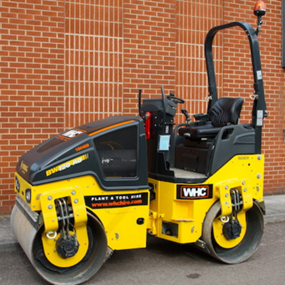
A tandem roller is a type of compaction machine designed to evenly compact surfaces. Its design features two steel drums, one at the front and one at the rear, making it highly effective for granular soils, cohesive, non-cohesive, and bituminous materials. It is also commonly known as a ride-on roller or road roller.
Many tandem rollers are vibratory, meaning they use vibration to achieve more efficient compaction. This helps provide a smooth, ripple-free surface ready for finishing or further construction.
Common Uses for Tandem Rollers
Tandem rollers are used across a wide variety of construction applications, including:
- Road Construction: Smoothing asphalt and compacting subbases
- Driveways and Car Parks: Creating a clean, high-quality surface finish
- Paving Areas: Achieving consistent density across the entire site
- Subbase Granular Compaction: Preparing subbase layers for paving or layering
Types Of Tandem Rollers
Tandem rollers can vary in weight, drum size and vibration capabilities. Therefore, choosing the correct machine highly depends on material, project size and your overall compaction requirements.
Smooth Drum Tandem Roller
Smooth drum tandem rollers are highly popular for a wide range of applications.
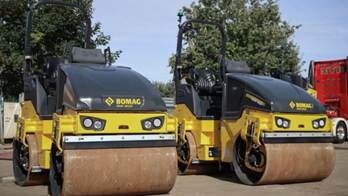
Best For: Granular and bituminous materials such as asphalt.
Features:
- Smooth steel drum for even surface finish
- Vibratory front and rear drum for deeper compaction
Advantages:
- High-quality finish for driveways, car parks, and roads
- Faster coverage on large surfaces
Considerations: Not suitable for clay or other cohesive soils.
What Is a Self-Propelled Roller?

Self-propelled rollers are a popular type of compaction machinery that move under their own power, without the need to be towed. These specialist machines are designed to provide controlled and consistent compaction across a wide variety of surfaces, making them highly versatile in the world of compaction.
Self-propelled rollers can be used on granular soils, bituminous materials, cohesive, and non-cohesive materials. They are typically equipped with a smooth or padfoot drum, depending on the application.
Unlike tandem rollers, self-propelled rollers generally have a single front drum, supported by tractor tyres at the rear. This design offers superior traction, making them suitable for inclines and rougher terrains commonly found on modern construction sites. Their versatility makes them popular for both small and large-scale projects, where precision and control are essential.
Common Uses Of Self-Propelled Rollers
Self-propelled rollers are widely used throughout a vast range of construction tasks such as:
- Road construction: Compacting the subbase layers efficiently.
- Landscaping: Compacting soil and granular materials for pathways and ponds
- Civil Engineering: To achieve a uniform compaction across a large space, embankments and foundation layers.
Types of Self-Propelled Rollers
The designs and sizes of self-propelled rollers can vary between manufacturers; however, the most common designs are:
Self-Propelled Smooth Drum Rollers
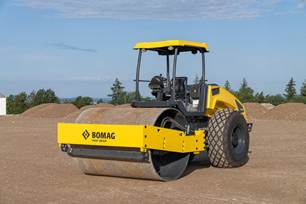
These machines usually sport a large smooth drum roller at the front of the machine, while being supported by tractor tyres at the rear.
Best For: Compacting granular materials such as sand, gravel and crushed rock.
Features:
- Smooth clean finish
- Vibratory front drum to enhance compaction
Advantages:
- Highly versatile as it can be used across multiple stages of a project
- Specifically designed to compact non-cohesive or granular materials.
Considerations: Not suitable for clay or other cohesive soils.
Padfoot Self-Propelled Rollers
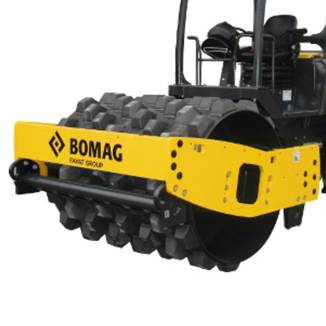
Very similar to a smooth drum design, however, their roller is covered with rectangular lugs or “feet” designed for deeper kneading of cohesive materials such as clay and silt.
Best For: Compacting cohesive and wet, fine-grained soils, such as clay, silt, and mud
Features:
- Studded drum and vibration mechanism for deep compaction
- Offering a kneading action to break up soil clumps and remove air pockets.
Advantages:
- Deep uniform compaction for cohesive materials
- Superior traction and manoeuvrability, especially when working on embankments.
Considerations: Not suitable for smooth finishes
How To Choose The Right Tandem Or Self-Propelled Roller?
Now that we’ve introduced you to the common types of tandem and self-propelled rollers you’re likely to encounter, one big question remains… which one is right for your project’s needs?
To ensure you get the correct machine for the job, there are several key pieces of information you’ll need before selecting a roller. These include:
Type of material you are compacting
This has the biggest influence on choosing the correct roller, as different materials react differently under compaction.
Site dimensions
To make sure the roller you hire can fit, operate safely, and manoeuvre efficiently within your site layout.
Result requirements
Whether you need a smooth, high-quality finish or a more uniform, deep compaction layer will determine the drum style and compaction method.
Having this information to hand ensures you can select the most compatible machine for your project and achieve the correct type of compaction required.
Types Of Material To Compact
The first stage in selecting the correct type of roller is to identify the material you’re looking to compact. Understanding the characteristics of each material not only helps you choose the most suitable roller, but also enables you to determine the correct compaction method required.
Each material type has an optimum compaction rate, which will also determine the maximum layer thickness (or “lifts”) you can work in. Choosing the right roller becomes far easier when you understand how the material behaves under compaction.
Cohesive Soils
Cohesive materials behave very differently under compaction—they hold moisture, bind tightly together, and often need a deeper, more forceful compaction method. Identifying them early ensures you choose a roller with the right traction, drum type, and compaction force to achieve proper density and avoid issues like surface cracking, uneven settlement, and costly rework.
- Material examples: Clay, silt
- Common characteristics: Stick together, moisture sensitive, requires kneading
- Recommended rollers: Padfoot or sheepsfoot
- Uses: Foundations, subbases, drainage layers
Granular Soils
Granular soils compact very efficiently because they don’t bind together and rely on particle rearrangement rather than moisture. Identifying them early allows you to choose a roller that delivers the right vibration and drum size for maximum density. Using the wrong machine can lead to poor interlocking, reduced load-bearing capacity, and premature surface failure.
- Material examples: Sand, gravel, crushed stone
- Common characteristics: Loose particles; compaction relies on weight and vibration
- Recommended rollers: Smooth drum or vibratory
- Uses: Driveways, roads, car parks
Non-Cohesive Materials
Non-cohesive materials like sand, gravel, and aggregates don’t bind together naturally, which means they rely heavily on the correct machinery to lock particles into place. Because these materials shift easily, choosing the right roller is essential to avoid rutting or uneven settlement. In most cases, a vibratory smooth drum tandem or self-propelled roller will deliver the best results, as they both compact loose particles efficiently without dragging or displacing them.
- Material examples: Sand, gravel, crushed stone, loose aggregates
- Common characteristics: Do not bind naturally and shift easily if not properly compacted
- Recommended rollers: Vibratory smooth drum rollers (tandem or self-propelled) for efficient compaction without displacing material
- Uses: Driveways, subbase layers, landscaping, paving foundations
Bituminous Materials
Bituminous materials, including asphalt and bitumen-bound mixes, need to be compacted while still hot to achieve a smooth, durable surface. These materials are flexible under heat, but if the wrong roller or method is used, they can warp, crack, or develop uneven ridges. Using a smooth drum tandem roller or vibratory self-propelled roller ensures consistent pressure across the surface, producing a uniform, high-quality finish every time.
- Common examples: Asphalt, hot-rolled bitumen, bitumen-bound aggregate mixes
- Characteristics: Flexible when hot; requires consistent, even pressure to avoid ridges, bumps, or cracking
- Recommended Rollers: Smooth drum tandem rollers (static or vibratory)
- Typical Uses: Road surfaces, driveways, car parks, footpaths
Types Of Applications For Tandem Rollers
Tandem rollers are used across a wide range of construction applications, but not every project requires the same level of compaction performance. Understanding the type of application is key to selecting the right machine size, drum configuration, and operating method.
Below is a breakdown of the most common tandem roller applications to help you choose the right machine for the job.
Light Duty Applications
For smaller compaction tasks such as footpaths, garden paths, and small driveways, mini smooth pedestrian rollers or small tandem rollers are best suited. These machines provide the necessary compaction force while being compact enough to access tight or restricted areas with ease.
Medium Duty Applications
For larger projects such as highway construction, car parks, and commercial driveways, medium to large smooth or vibratory tandem rollers are often the preferred choice. With a wide range of drum widths and machine sizes available, operators can tailor their selection to suit individual site requirements and material types.
Heavy Duty Applications
Large-scale civil engineering projects typically require the largest and most powerful tandem rollers. These machines are commonly used to stabilise sub-ground levels across large areas. For tasks of this scale, high-weight tandem rollers deliver maximum compaction performance. In some cases, remote trench rollers (RT rollers) are also used to compact layers of soil or stone. Heavy-duty applications often require strict compaction rates and adherence to specific project specifications.
Types Of Applications For Self Propelled Rollers
Self-propelled rollers are designed for applications where greater traction, control, and compaction force are required. Unlike tandem rollers, which use two drums, self-propelled rollers typically feature a single front drum with rear tyres, allowing them to perform more effectively on uneven ground, slopes, and deeper material layers.
Below is a breakdown of common self-propelled roller applications to help determine when this machine type is the better choice.
Light Duty Applications
For light-duty tasks such as small access roads, temporary site tracks, and landscaping projects, compact self-propelled rollers provide controlled compaction while offering improved traction over tandem rollers. Their single-drum design allows better performance on loose or uneven surfaces where a tandem roller may struggle to maintain grip.
Medium Duty Applications
In medium-duty applications such as commercial developments, car parks, and road base construction, self-propelled rollers are often preferred for their ability to compact thicker material layers. The increased machine weight and rear-wheel traction allow for deeper, more consistent compaction, particularly on granular or cohesive soils.
Heavy Duty Applications
For large-scale civil engineering and infrastructure projects, self-propelled rollers are commonly used during groundworks and sub-base preparation. These machines excel in conditions where stability, climbing ability, and sustained compaction force are critical. In heavy-duty scenarios, self-propelled rollers are often specified to meet strict compaction requirements across large areas or challenging terrain.
Smooth Drum vs Padfoot Roller – Which One Should You Choose?
Choosing between a smooth drum and a padfoot roller is one of the most important decisions when selecting compaction equipment. While both machines are designed to achieve density, it’s essential to understand that they work in very different ways and are suited to different materials, ground conditions, and stages of construction.
The last thing you want is insufficient compaction or surface damage, both of which can lead to costly rework. Understanding how each drum operates — and when to use them — ensures you achieve the required compaction results efficiently and safely.
Smooth Drum Roller
Smooth drum rollers are designed to deliver even, uniform compaction across flat surfaces. They use a solid steel drum to apply consistent pressure, making them particularly effective for surface-level compaction and finishing work.
These rollers are most commonly used on bituminous materials, granular soils, and subbase layers where a smooth, high-quality finish is required. Most modern designs are fitted with vibration technology, enabling more efficient compaction without disturbing the material structure or causing displacement.
Smooth drum rollers are typically used during the final stages of a project; however, they can also be adopted at earlier stages where a uniform, ripple-free surface is essential.
Padfoot Rollers
Padfoot rollers, also known as sheepsfoot rollers, are designed for deep, high-impact compaction on softer or more challenging ground conditions. We’re talking about your clays, silt, and wet soils with high moisture content. Instead of a smooth surface, the drum is fitted with raised pads that penetrate the material, applying pressure deeper into the layer.
These rollers are most effective where a kneading action is required to remove air pockets and achieve proper density. The padfoot design allows material to be compacted from the bottom up, making it ideal for early-stage construction and sub-ground preparation.
Padfoot rollers are typically used during the initial phases of a project, particularly when stabilising subbases or working on uneven or loose terrain. Once the required density has been achieved, a smooth drum roller is often used to finish and level the surface.
How To Decide
Selecting the right drum type depends on the material, project goals, and site conditions. For loose materials, a smooth drum roller is typically the best choice, while cohesive soils such as clay or silt are better suited to a padfoot roller.
The project goal also plays a key role in the decision. If the primary objective is to achieve a smooth, high-quality surface finish, a smooth drum roller is ideal. Conversely, if the focus is on structural stability or deep compaction, a padfoot roller provides the necessary kneading action and penetration.
Layer thickness and site conditions should also be considered. Thicker material layers, uneven terrain, or soils with high moisture content often favour padfoot rollers for deeper compaction, whereas thin layers or flat, accessible surfaces are best suited to smooth drum rollers.
By evaluating the material characteristics, desired outcome, and site conditions, you can confidently select the roller and drum type that will deliver efficient, uniform, and high-quality compaction results.
Benefits of Hiring a Tandem or Self-Propelled Roller
Whether you need a tandem or self-propelled roller for your project, hiring offers significant financial and project efficiency benefits.
Cost-Effective
Unlike purchasing compaction equipment, hiring is often far more cost-effective. There’s no upfront investment required, allowing you to achieve the results you need without committing to the high cost of ownership.
High-Quality Equipment
Reputable roller hire suppliers provide state-of-the-art machinery designed to meet project requirements efficiently and reliably. Tandem and self-propelled rollers are usually serviced and tested before each hire to ensure they operate correctly and to the highest standards.
Operator Support
Hiring a roller often comes with full support for the duration of your hire period. If a breakdown occurs, or if you need help troubleshooting operator errors, assistance is available every step of the way, reducing downtime and ensuring smooth project progression.
Flexible Hire Periods
Flexible hire periods allow businesses to access the right compactor when and where it’s needed, paying only for the time it’s used. As projects evolve, so do machinery requirements. Hiring also allows you to swap machinery sizes without additional purchases or new contracts, making it easy to scale equipment up or down as needed.
Conclusion
Choosing the right roller hire requires careful consideration of several factors, including material type, application, project size, compaction method and contract specifications. Understanding the characteristics of different materials, the type of application, and the benefits of smooth drum versus padfoot rollers, you can make an informed decision that ensures efficient, uniform, and long-lasting compaction.
Hiring a roller also offers significant advantages, from cost savings and access to high-quality, well-maintained equipment to flexible hire periods and operator support. In turn, this enables organisations to scale machinery to the needs of the project without unnecessary investment or long-term commitments.
For professional roller hire or expert guidance on choosing the right machine, get in touch with WHC Hire Services. Our extensive, high-performance fleet of rollers ranges from pedestrian models to 7-ton smooth and padfoot designs. Browse our stocklist on our website, or call your local depot today for assistance in finding the right tandem or self-propelled roller for the job.