Hiring Vs Purchasing Access Equipment: Which Is Right For Your Business
The decision to either hire or invest in access hire equipment has long been debated across the construction industry. In truth, the right choice is highly individual and depends on a business’s goals, cash flow and long-term strategy. Nevertheless, choosing the right access equipment is crucial to completing working at height tasks safely and efficiently for everyone involved.
Whether you are considering hiring or purchasing access equipment, there are a number of advantages and drawbacks to weigh up. In this WHC Hire article, we will provide everything you need to know to help you determine which option delivers the best value for your business.
Why The Hire Vs Purchase Decision Matters?
Access equipment such as scissor lifts, cherry pickers and boom lifts all represent a significant investment. Not just in terms of the initial outlay, but also ongoing maintenance, storage and compliance requirements.
Whether you are carrying out short-term maintenance, large-scale construction projects or specialist contract work, the decision you make can directly affect:
Cash Flow
Investing in purchasing your own access equipment can tie up a substantial amount of capital in a depreciating asset, limiting funds that could otherwise be used elsewhere in the business.
Operational Flexibility
Not having immediate access to your own machine can reduce flexibility and impact response times. However, owning equipment also means being limited to that specific machine, which may not always suit every project requirement.
Compliance Responsibilities
Whether you hire or purchase access equipment, machinery requires a LOLER inspection every six months. The key question is…who wants the responsibility of ensuring inspections, servicing and documentation remain fully up to date?
Storage Considerations
Not all access equipment is easily stored. Secure storage space is essential, particularly during quieter periods when equipment is not in use. Long-term planning should factor in these requirements.
Project Profitability
Which route is going to prove more profitable for your business in the short and long term? The answer should align with your overall strategy, projected workload and financial goals.
For many businesses, the choice between hiring and purchasing access equipment is not simply a financial decision – it is a carefully calculated and strategic one.
What Is Access Equipment & Which Businesses Use It?
Access equipment is designed to enable safe and efficient working at height. Examples include scissor lifts, cherry pickers, powered access platforms and MEWPs, to name just a few. Each of these machines is widely used across a range of industries, including:
Construction & Infrastructure
Access equipment is vital in the construction of steel-framed buildings, roofing projects and wider structural developments, where safe and stable height access is essential.
Electrical Installation
For indoor electrical installations, particularly in high-ceiling environments such as warehouses or commercial units, this type of equipment is extremely beneficial.
Facilities Management
Ongoing building maintenance, including repairs, inspections and servicing, can be carried out safely and efficiently using scissor lifts or boom lifts.
Warehouse Operations
Storage, stacking and internal logistics can be managed more safely when appropriate access equipment is used, particularly in high-racking systems.
Tree Maintenance
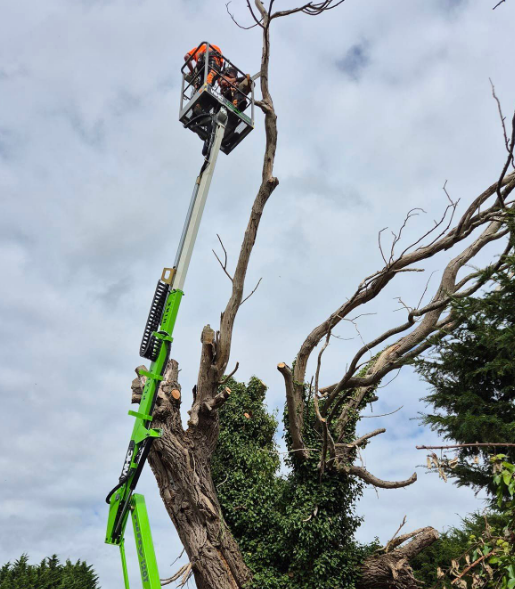
Safe removal of trees can be easily conducted with an appropriate boom lift where climbing may not be suitable or safe.
If you are unsure when this type of equipment is required, our guide What Is Powered Access & When Should Contractors Hire It provides a deeper overview of common use cases and hiring considerations.
Before deciding whether to hire or purchase, it is essential for any business to understand how often and intensively the equipment will be used. This helps ensure you choose the most suitable access solution and method to support your operational needs.
Benefits Of Hiring Access Equipment
For many contractors and SMEs, access equipment hire offers a high level of flexibility, availability and reduced upfront risk.
Lower Initial Investment
Purchasing powered access equipment requires significant investment and capital. Choosing to hire removes that high upfront cost, freeing up funds for other areas of the business such as staffing, training or expansion.
This flexibility enables growing businesses to remain financially agile, rather than tying up capital in long-term assets.
Flexibility for Different Projects
When purchasing your own access equipment, you are confined by the limitations of that specific machine. Not all access equipment is suitable for every scenario. For example, one project may require a compact indoor scissor lift, while the next demands a boom lift with extended reach.
Hiring access equipment allows you to select the right machine for each individual project, rather than relying on a single owned asset.
Maintenance and Compliance
When your business chooses access equipment hire, the responsibility for maintenance, servicing and LOLER inspections typically lies with the hire company. Machinery should always be delivered in safe working order, ensuring compliance with current regulations.
For businesses, this removes a significant administrative burden associated with equipment ownership and safety management. However, it is still essential to understand safety standards and operator responsibilities when hiring machinery. You can find further guidance in our supporting article, Cherry Picker and Scissor Lift Hire: Safety and Rules.
Quick Access to Modern Equipment
When hiring machinery, there is often minimal lead time (subject to availability). Reputable hire fleets are regularly updated, meaning businesses benefit from modern safety features, improved fuel efficiency and enhanced performance. All without the concern of depreciation.
No Storage or Transport Concerns
Owned access equipment requires secure storage and organised transport logistics, which can lead to additional costs and planning. When businesses choose to hire, these concerns are significantly reduced, making it a practical option for many SMEs.
Benefits Of Purchasing Access Equipment
While hiring access equipment offers a wide range of flexibility, purchasing can be a smart option in certain scenarios.
Long-Term Cost Savings
If your business requires access equipment consistently and frequently, this may justify a long-term investment. In these cases, purchasing can reduce costs over time.
Over several years, cumulative hire fees can exceed the original purchase price of the machinery.
If you are already hiring equipment and considering buying, a simple break-even analysis can help determine when ownership becomes financially advantageous.
Immediate Availability
Owning equipment means you are in complete control of its use. It is available whenever and wherever you need it, without consulting a third party.
This removes the need to check availability or schedule deliveries during busy periods. For businesses operating continuous long-term contracts or reactive maintenance schedules, this level of control can be highly valuable.
Asset Ownership
Once purchased, access equipment becomes a business asset. Although it will depreciate over time, it will still retain resale value. This means that even after several years of ownership, you are likely to recover a portion of your initial investment.
For established businesses with stable workloads, this can strengthen the balance sheet and support long-term financial planning.
Customisation and Familiarity
When you purchase your own access equipment, you can select the exact make, model and specifications required for your operations. Hiring may limit you to what is available within a fleet at that time.
Using the same equipment consistently also allows teams to become highly familiar with its controls and configurations, potentially increasing efficiency, confidence and overall productivity.
When Hiring Access Equipment Makes Sense
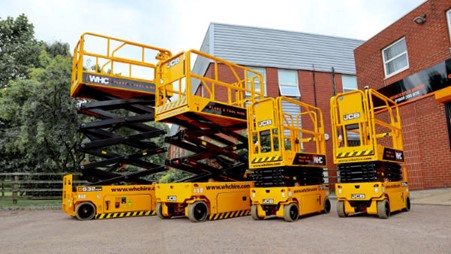
Choosing to hire access equipment is often the better option for businesses where:
- Projects are short-term, one-off, or carried out annually
- Working at height is occasional rather than daily
- Cash flow is a priority
- Storage and transport logistics are a concern
- There is a preference not to manage ongoing maintenance and compliance responsibilities
Hiring access equipment makes sense for contractors who require different types of machinery across multiple sites, rather than for one specific, regular task.
When Purchasing Access Equipment Makes The Most Sense
Purchasing access equipment can be a strong decision for businesses that:
- Use a particular type of access equipment daily or near-daily
- Have the capabilities to service, test and transport their own machinery
- Have long-term, established contracts in place where the equipment will be consistently required
- Consistently find themselves hiring the same machine over an extended period
The key to purchasing access equipment is ensuring the asset can reach the break-even point and remain well utilised throughout its ownership. Extended periods of downtime can quickly make ownership far less cost-effective than hiring.
Cost Comparison: Hire Vs Purchase Access Equipment
Consider the following example:
If hiring a scissor lift costs £300 per week and your business uses it for 10 weeks a year, this amounts to £3,000 per year in hire charges.
If purchasing the same machinery costs £30,000, ownership may only become cost-effective after around 10 years at the current rate of usage. However, if usage increases to say 35 weeks per year, ownership could become cost-effective within just 3.
It’s important to note that the true cost of ownership must also account for several additional factors:
- Maintenance & Servicing – Ensuring the equipment is regularly maintained and inspected
- Insurance – The cost of insuring both the equipment and its operators
- Training – Any additional training required for safe operation on specific sites
- Depreciation – The reduction in value of the asset over time due to use and age
- Finance Interest – Interest payments on purchased equipment, which can fluctuate over time
For many organisations, the reduced risk and flexibility of hiring access equipment outweigh the potential long-term savings of ownership.
Risks & Considerations For Both Hire & Purchasing
No matter which method your business chooses to acquire access equipment, both options come with their own risks and considerations. Here are some key points to be aware of before committing:
Risks of Hiring
- Costs can accumulate with long-term, frequent use
- Availability may be limited, especially during peak seasons for specific equipment
- No equity is built in the equipment
Risks of Purchasing
- High upfront purchasing costs, tying up capital
- Depreciation and uncertain resale value
- Ongoing maintenance, LOLER inspections and compliance responsibilities
- Risk of underuse or idle equipment
A close inspection of your workload, forecasting and financial position is essential to make the best decision for your business. For organisations uncertain of their workload, many choose to hire access equipment until it becomes financially viable to invest. This approach ensures that work can begin without delay, regardless of long-term ownership plans.
Making The Right Choice For Your Business
Overall, there is no universal answer to the hiring vs purchasing debate. The right decision depends on utilisation, financial strategy, and forecasted operational demands.
For many businesses, access equipment hire bridges the gap for current operations. It provides significant flexibility, reduced risk, and simplified compliance. Making it ideal for project-based tasks.
For others, purchasing can deliver cost efficiency and asset value over time, provided there is consistent utilisation of the machinery.
If you’re unsure which option is best for your business, explore WHC Hire’s access equipment hire stocklist to see the range of machines available for hire, or speak to a member of our team who can provide tailored advice to meet your specific project needs.