
How Easy Are Mobile Welfare Units to Move on Event Sites?

One of the biggest concerns when hiring a mobile welfare unit for an event is how easy it is to move around the site. Whether you are organising a festival, sporting event, outdoor exhibition, or temporary production site, understanding the process can help ensure your setup runs smoothly, especially when working to tight build or breakdown schedules.
Mobile welfare units are designed to do exactly what the name suggests. They are mobile, flexible, and easy to reposition when required. Unlike fixed welfare cabins, mobile units offer far greater versatility when supporting complex event projects. The ability to relocate welfare facilities across different areas of a site can improve efficiency for crew members and reduce unnecessary downtime during busy event operations.
In this guide, we will explain everything you need to know about moving welfare units on event sites, including how to transport them, what equipment you’ll need, and the key factors you should consider before repositioning them.
What Makes Mobile Welfare Units Easy to Move?
The biggest benefit of mobile welfare units to event production crews and delivery teams is their portability. Most modern units are mounted on lightweight towable chassis systems, which makes them quick and easy to transport around site. As a result, along with the correct setup and towing equipment, the process can often take just minutes and requires minimal effort.
Some of the key features that make mobile welfare units easier to move around event sites include:
Lightweight Towable Chassis
Their lightweight chassis design enables welfare units to be repositioned quickly and efficiently across all phases of event delivery, from initial setup through to breakdown.
Compact Design
Mobile welfare units are compact and easy to manoeuvre, making positioning far simpler in restricted or busy event environments.
Hydraulic Lowering Systems
Some modern welfare units feature hydraulic lowering systems that allow the unit to be lowered safely into position without the need for chains or additional lifting equipment.
Integrated Towing Hitches
Integrated towing hitches allow welfare units to be coupled with a wide range of site vehicles, providing greater flexibility when transporting units around event sites.
Self-Contained Water and Waste Tanks
Self-contained water and waste systems allow the entire welfare setup to move as one complete unit, helping reduce setup times and improving relocation efficiency.
Independent Onboard Power
Many mobile welfare units feature integrated onboard power systems, removing the need for permanent external connections. Some models also utilise solar-assisted power systems to improve efficiency on temporary sites.
These are just a few examples of the features that allow welfare units to be transported and repositioned quickly without extensive setup work. However, for busy event sites, having portable welfare facilities can improve crew efficiency, reduce downtime, and ensure welfare access remains close to active working areas.
How Are Welfare Units Transported Around Event Sites?
One of the key factors when repositioning or transporting your own hired mobile welfare unit around an event site is having the right equipment available to do so safely and efficiently.
Without a suitable towing vehicle, mobile welfare units can quickly become as restricted as their static counterparts. The most suitable transport method will usually depend on factors such as:
- The size and weight of the welfare unit
- Ground conditions across the site
- Access routes and turning space
- Budget limitations
- Frequency of relocation during the event
Below are some of the most common vehicle types you can use to reposition mobile welfare units on event sites.
Suitable 4×4 Vehicles
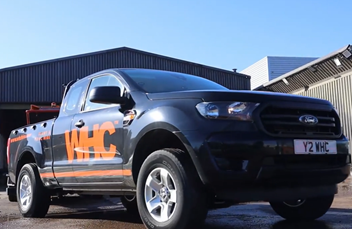
Most outdoor event teams will already have access to a suitable towing 4×4 as part of their operational fleet. However, it is important to ensure the vehicle is fitted with the correct towing hitch and is capable of towing weights of up to 3,500kg.
4×4 vehicles are often one of the most practical solutions for moving welfare units around temporary event sites.
Telehandlers
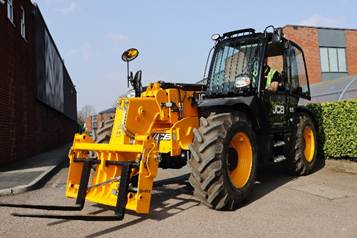
Many large-scale events rely heavily on telehandlers during setup and breakdown phases for loading equipment, positioning staging, and moving materials around site.
Most telehandlers fitted with rear tow hitches can also support the repositioning of mobile welfare units. Making them a highly practical multi-use machine during event operations.
Dumpers

Some articulated forward tipping dumpers are fitted with rear drop-link towing hitches, allowing them to manoeuvre mobile welfare units across site when needed.
For events involving large amounts of groundworks, temporary trackways, or loose material movement, dumpers can provide a versatile solution that supports multiple site operations at once.
Agricultural Vehicles
For rural events or countryside festival locations, agricultural vehicles can often assist with the movement of mobile welfare units.
Using existing on-site agricultural machinery can be a highly efficient way of repositioning welfare facilities without requiring additional transport equipment.
Single axle and smaller towable welfare units are often straightforward to reposition throughout an event, particularly at large festivals where contractor compounds and working areas can change daily.
On larger event sites, welfare units are commonly delivered and positioned before the main site build begins, before being relocated as different phases of the project progress. This helps ensure crew members remain close to active working zones without affecting public areas or pedestrian routes.
Careful planning with your event equipment hire supplier is essential when organising busy event sites.
How long Does It Take To Set Up A Mobile Welfare Unit?
One of the biggest benefits of mobile welfare units is their fast and seamless deployment. As a result, once positioned, crews have instant access to shelter, rest areas, canteen facilities, heating, power, toilets, and wash facilities without requiring additional installation work.
Many units can be positioned, lowered, and ready for use in as little as three minutes. However, it is important to deploy welfare units on firm, level ground wherever possible to ensure safe and efficient setup.
Setup will often include:
Positioning the Unit
The welfare unit should ideally be positioned on firm and level ground. Events taking place on sloped fields or uneven terrain may need to carefully consider access routes and final positioning locations before deployment.
Lowering Into Position
Modern hydraulic-powered systems allow welfare units to be lowered safely into position while slowly retracting the wheels. This helps minimise ground disturbance and improves deployment safety.
Locking and Securing the Hitch
Many welfare units include tow bar guards or hitch locks that should be lowered and secured after positioning to help prevent theft or unauthorised movement.
Activating Onboard Power Systems
Once positioned, onboard power systems should be checked to ensure lighting, heating, charging points, and internal facilities are functioning correctly before use.
Checking Water and Waste Systems
Water supplies and waste systems should be inspected before operation. When hiring a welfare unit, these systems are typically prepared and serviced before delivery.
Preparing the Unit for Use
Once all systems have been checked and activated, the welfare unit is ready for use. Additionally, it is important to ensure the facilities are only used within the recommended occupancy limits provided by the manufacturer or hire company.
For the most part, mobile welfare units can be prepared by a single operator and, with the correct know-how, can be completed quickly and efficiently.
Can Welfare Units Be Repositioned During An Event?
Yes, mobile welfare units are designed to be quickly repositioned should the need for relocation occur.
This flexibility is one of the core reasons they are used across temporary event environments. As sites evolve during set-up, live operation, and breakdown, welfare facilities may need to be relocated to remain accessible for staff and crew members.
This efficiency helps maintain site productivity and reduces overall walking distances between working areas and rest and break zones.
How To Deploy A Mobile Welfare Unit
Here is a guide to show how quickly a mobile welfare unit can be ready for use at events.
1: Locate the deployment area
Ensure the unit is positioned on flat, hard ground for the best results.
2: Disconnect from the towing vehicle
Engage the brakes on the trailer unit and disconnect the welfare unit from the vehicle. Not forgetting any safety and electrical cables.
3: Lower the hydraulic feet
Use the hydraulic controls to lower the unit’s feet until the wheels are lifted off the ground. (Some models may require the generator to be running.)
4: Remove the jockey wheel
With the tow bar raised, remove the jockey wheel from the A-frame.
5: Disengage the axle
Once the jockey wheel has been removed, disengage the axle so the wheels can be stored away when lowered.
6: Lower the unit
Using the hydraulic system, slowly lower the unit into its resting position.
7: Detach the hydraulic system and towing cables
Once the unit is safely on the ground, remove all installation and towing cables and store them away safely.
8: Secure the unit
Lower the A-frame security cover and lock it into place to prevent access to the tow bar.
9: Remove the lighting board
Detach the lighting board from the rear of the unit and store it safely, ready for when the unit is towed again on public roads.
10: Unlock the unit
Unlock all doors so the unit is ready for use.
What Ground Conditions Are Needed For Mobile Welfare Units?
One of the key considerations for all event crews looking to use mobile welfare units is where to position them. Even so, mobile welfare units perform best on relatively level and stable ground. So, if you’re holding an event in the height of summer or autumn, most outdoor locations should pose no problems.
However, if you’re facing heavy downpours or operating during the winter months, you may need to carefully consider your placement locations.
Suitable surfaces to set up your mobile welfare unit on include:
• Hardstanding
• Temporary surfaces
• Compacted gravel
• Dry grass areas
• Event flooring
Ground conditions not only affect placement but also influence towing safety and repositioning throughout the duration of the event.
As a result, for large outdoor events, proper ground preparation can improve accessibility and reduce operational disruptions.
Mobile Vs Static Welfare Units For Event Sites
Both mobile and static welfare units offer advantages depending on the scale, duration, and layout of the event site. Even so, choosing the right welfare solution can lead to measurable time, cost, and operational efficiency savings throughout all stages of an event.
| Feature | Mobile Welfare Units | Static Welfare Units |
| Mobility | Easy to reposition | Fixed placement |
| Setup Speed | Fast deployment | Longer installation |
| Best For | Temporary and changing layouts | Long-term locations |
| Access Flexibility | High | Limited |
| Transport Requirements | Towable | Requires delivery equipment |
| Site Adaptability | Excellent | Moderate |
| Equipment Required to Move | 4×4 or suitable towing vehicle | HIAB or heavy lifting equipment |
| Hire Cost | Low to medium | Low |
| Delivery Cost | Low | Higher |
As the table above suggests, mobile welfare units are often better suited to events with evolving layouts, temporary contractor zones, and shorter operational periods. As a result, the flexibility these units provide can offer far greater versatility throughout the entire hire period.
Static welfare units, on the other hand, are generally more suitable for long-term fixed positions where relocation is unlikely after installation. While static units may sometimes attract lower initial hire costs, their delivery, lifting, and positioning charges can often make them more expensive overall when compared to mobile alternatives.
What Is Included In A Mobile Welfare Unit Hire
Most mobile welfare unit hire packages include a range of essential facilities designed to support crew hygiene, comfort, and operational efficiency during events. In many cases, these units can also double up as temporary mobile offices for production teams, contractors, and event management staff.
Most mobile welfare units available for hire will typically include:
- Toilets
- Handwashing facilities
- Seating areas
- Office space
- Heating systems
- Access to clean water
- Charging points for phones and laptops
- Kitchen and canteen areas
- Waste management systems
The exact specification will often depend on the size of the welfare unit and the operational requirements of the event. However, when choosing the right setup, it is important to ensure the facilities can comfortably accommodate both your crew size and day-to-day operational needs.
For a more detailed breakdown of facilities and optional features, take a closer look at what’s included in welfare unit hire for events.
Choosing the Right Welfare Unit For Your Event Site
One of the biggest challenges many event operations face is choosing the right size mobile welfare unit for the site they are managing. The last thing any crew wants is queues forming outside welfare facilities simply to access bare necessities.
With this in mind, there are several key operational factors that can influence which welfare unit is most suitable for your event.
Event Size
The larger the event, the greater the number of welfare units required to comfortably support crew members, contractors, and operational staff across the site at any one time.
Site Layout
Operational areas with restricted space may limit the size of the welfare unit that can be safely manoeuvred into position. This is particularly important on busy event sites where equipment, staging, fencing, and temporary structures are constantly being installed and removed.
Ground Conditions
Some ground conditions may not be suitable for supporting larger mobile welfare units. In these situations, welfare facilities may need to be positioned in alternative locations to safely support ongoing operations.
Number of Staff
This is often one of the most important considerations. Mobile welfare units are only designed to support a specified number of users at one time. Common models typically include 6-person and 10-person welfare units.
Overloading welfare facilities can lead to increased servicing requirements and reduced comfort for crews during long operational periods.
Event Duration
Longer events can often benefit from larger welfare units or additional facilities. Increased space can provide extra room for breaks, temporary office functions, equipment storage, and essential operational supplies.
For outdoor events and festivals with evolving infrastructure and changing work zones, mobile welfare units often provide the flexibility needed to keep operations moving efficiently throughout all stages of the event lifecycle.
If you are still unsure whether your event requires welfare facilities, take a look at our guide on do you need welfare units for outdoor events, which explains the key legal, practical, and operational considerations in more detail.
FAQS About Moving Mobile Welfare Units On Event Sites
Can mobile welfare units be moved without specialist equipment?
Most mobile welfare units can be moved using a suitable 4×4 or towing vehicle. However, it is important that the vehicle is fitted with a suitable towbar and is capable of towing 3500kg.
Can welfare units be used on muddy event sites?
Yes. Even in difficult ground conditions, welfare units can often be positioned and lowered safely into place. However, it is always recommended to reinforce access routes where possible to ensure the units can be recovered and repositioned efficiently when required.
Do mobile welfare units require mains power?
Most modern mobile welfare units are fully self-contained, meaning they do not require mains power connections. Many operate using onboard generators, battery systems, or hybrid power solutions.
How often can welfare units be repositioned during an event?
Mobile welfare units can be repositioned whenever operational requirements change throughout an event. Depending on the unit type and site conditions, setup can often take as little as three minutes.
Are mobile welfare units suitable for festivals?
Yes. Many festival and event production teams now rely on mobile welfare units to support their events. Their flexibility and fast deployment make them a highly valuable asset across temporary event environments.
Conclusion
To conclude, mobile welfare units are designed to provide flexible and practical welfare facilities for temporary event environments where layouts, access routes, and operational requirements can quickly change.
Their portable design supports fast setup times, easy manoeuvrability, and efficient repositioning around site without the need for specialist lifting equipment. For festivals, outdoor productions, sporting events, and temporary contractor compounds, mobile welfare units offer a reliable solution that helps keep operations running efficiently throughout all stages of an event.
If you are considering onboarding a mobile welfare unit for your next event or festival, speak to the team at WHC Hire Services about the bespoke event equipment hire packages available to help support the successful delivery of your next live event.