Rollers For Trench Compaction: A Contractor’s Guide
Trench compaction is one of those tasks where using the wrong equipment can quickly come back to bite you, not just in terms of remedial work, but also in lost profit and damaged reputation. Poorly compacted trenches can lead to settlement, surface failure and costly callbacks, especially on large utility and groundwork projects.
For experienced contractors, the key decision often comes down to choosing the right type of machine for the job. When working in trenches, there are typically two main options: a remote trench roller (RT roller) and a padfoot self-propelled roller such as the BW124.
While both machines have their place, they perform very differently depending on trench width, depth, soil type and overall site conditions. In this guide, we will break down everything you need to know about trench compaction, helping you choose the right equipment and avoid costly mistakes on site.
What Is Trench Compaction?
Trench compaction involves compacting and backfilling material after excavation work, whether that is for drainage, utilities or cable installation.
For contractors, the goal is simple:
Remove Air Pockets
Removing air pockets within reinstated soil ensures that the particles bond together properly, creating a more stable base.
Restore Strength
Compaction increases the load-bearing capacity of the trench, allowing it to support traffic and surface loads without failure.
Prevent Settlement Issues
By removing air pockets and strengthening the ground, proper compaction helps prevent settlement and surface defects later down the line.
In the UK, correct trench compaction is essential for meeting reinstatement and building regulation standards, as well as avoiding long-term surface failure.
Why Trench Compactor Requires Specialist Equipment
Unlike working on open ground, trench compaction presents a number of challenges that prevent contractors from using just any roller. These include:
Confined Working Space
Trenches are often narrow and deep, meaning larger rollers are unable to safely access and operate within them. By using specialist trench compaction equipment, contractors can work efficiently while still achieving the required compaction levels.
Deeper Compaction Layers
Backfilling trenches requires compaction in multiple layers, often at greater depths. This demands a consistent and even compaction force, which is where specialised trench rollers perform best.
Prevent Structural Failures
Improperly compacted trenches can lead to serious issues such as settlement, cracked surfaces, sinkholes and even pipe displacement. Getting compaction right is critical to long-term performance.
Handling Cohesive Soils
On sites with heavy clay or silty materials, standard rollers struggle to achieve proper compaction. A padfoot drum provides a kneading action that is far more effective for these conditions.
Risk of Uneven Density
Achieving consistent density across the full length of a trench is essential. Specialist trench rollers help ensure a uniform compaction layer by layer, reducing the risk of weak spots.
While smooth drum rollers are suitable for granular materials or finishing layers, they are often not effective in trench conditions. This is why, when it comes to trench compaction, using the right machine is essential.
Best Rollers For Trench Compaction
For most trench applications, the most common roller types you can expect to come across are as follows:
Remote Trench (RT) Rollers
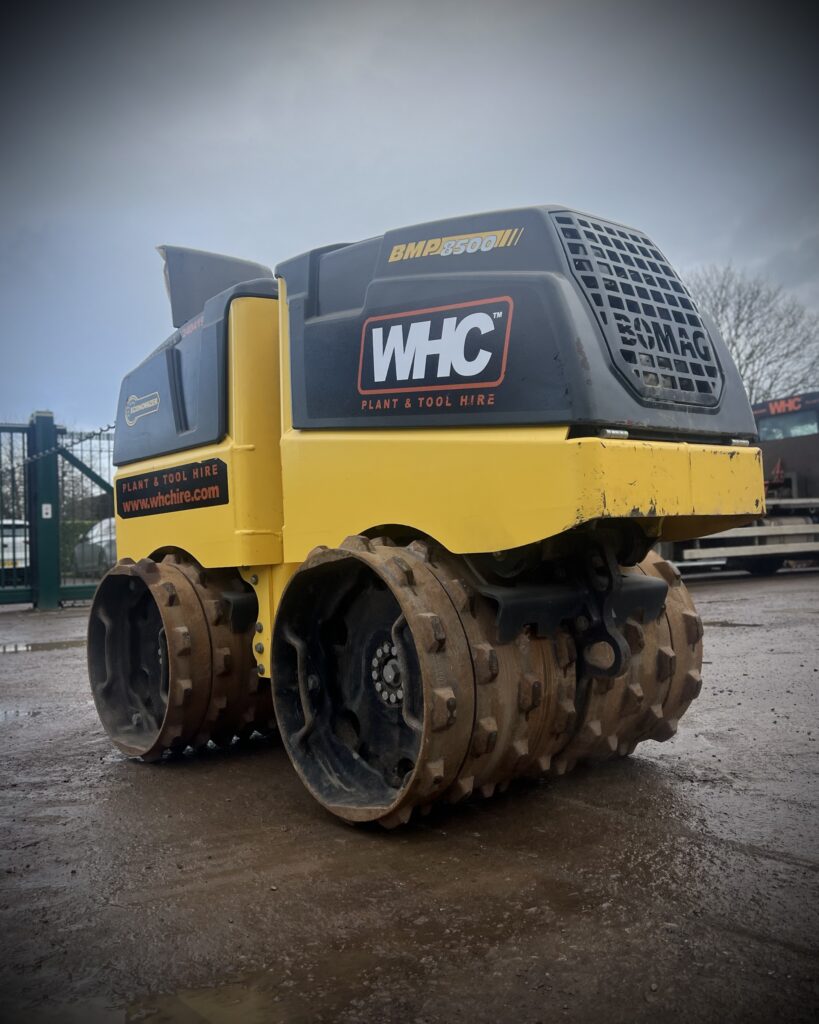
These are articulated, remote-controlled rollers designed for working in confined trenches and cohesive soils. They are often the most popular option for utility and groundwork applications due to their ability to deliver consistent compaction in restricted areas.
Small Padfoot Rollers (Bomag BW124)

These are better suited to wider, shallower trenches where access is less restricted. With the addition of a front blade, they can also be used for moving and backfilling material, making them a more versatile option on open sites.
Choosing the right option depends on access, trench depth and the overall scale of the job. While trench rollers are ideal for confined spaces, other applications such as driveways require different equipment. You can learn more in our guide on best rollers for driveways.
What is An RT Roller (Remote Trench)
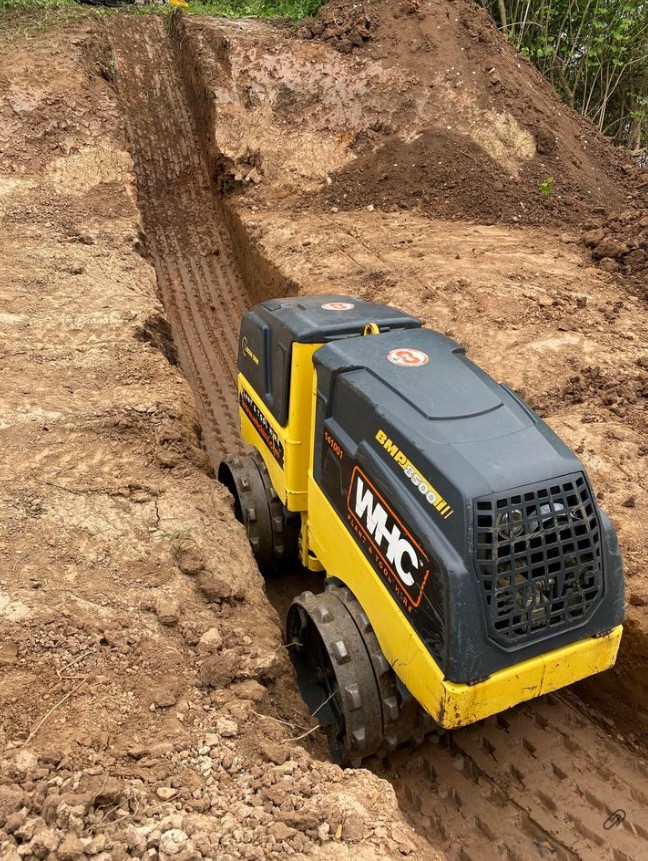
An RT, or remote trench roller, is a purpose-built compaction machine that is operated remotely and specifically designed for trench work. While designs have evolved over the years, modern machines typically include the following features:
Padfoot Drums
These drums are usually available in widths of 600mm and 850mm, allowing contractors to scale their compaction efforts depending on trench size and site requirements. The padfoot design delivers a deep kneading action, making it ideal for cohesive materials such as clay.
High Centrifugal Force
RT rollers deliver a high level of compaction force, making them well-suited to working in deeper layers. This allows contractors to achieve strong, consistent compaction in dense materials with each pass.
Remote Operation
Unlike other types of compaction equipment, RT rollers are operated via remote control. This allows operators to work safely from ground level, removing the risk of trench collapse. It also improves visibility and eliminates blind operation.
Compact Design
RT rollers are designed to be compact enough to operate safely within trenches. Most modern machines feature articulated bodies, making them easier to manoeuvre, especially when working along long or curved trench lines.
Because they are purpose-built for trench environments, RT rollers are often the go-to choice for utility contractors and groundworkers.
What Is A Padfoot Roller (Bomag BW124)?

Small self-propelled padfoot rollers such as the Bomag BW124 are ride-on machines fitted with features that support backfilling, grading and compaction.
Single Padfoot Front Drum
The padfoot drum is designed for deep compaction of cohesive materials, which is often required when backfilling trenches. It allows operators to work in layers of up to 125mm, depending on the soil type and site conditions.
Rear Tyres
Tractor-style rear tyres provide strong traction when working across uneven ground and trench backfill. This makes the machine suitable for a wide range of site conditions and improves overall versatility.
Compact Design
This type of roller is compact enough to operate in wider, shallow trenches, typically from around 1310mm and above. This makes it well-suited to larger trench compaction jobs, allowing operators to cover more ground efficiently with fewer passes.
Grading Blade
One of the key features of the BW124 is its front-mounted tilting blade. This allows operators to spread, level and backfill material while compacting, reducing the need for additional equipment on site.
These rollers are a popular choice for contractors who need a versatile machine that can handle both compaction and material handling. Their flexibility makes them a strong option for larger trenching and groundwork projects.
RT Roller Vs Padfoot BW124? Which To Hire.
When deciding which type of roller to hire for your trench compaction project, it is essential to consider the bigger picture to ensure you select the right machine for the job.
Opting for either of these trench roller options comes with its own advantages:
RT Roller Advantages
RT rollers have been specifically designed with trench work in mind:
- Can be easily operated in narrow trenches
- Remote-controlled to improve operator safety
- Suitable for deeper trench applications
- Deliver consistent compaction in confined spaces
- Available in different widths to suit site-specific requirements
- Ideal for utilities, pipelines and backfill work, particularly in cohesive soils
Padfoot Roller (Bomag BW124) Advantages
Padfoot rollers such as the Bomag BW124 come into their own on larger jobs:
- Ideal for wider, shallow trenches and open areas
- Front-mounted blade allows operators to backfill and compact at the same time
- Can compact similar layer depths but across wider strips
- Tractor-style tyres improve all-terrain capability
- Delivers consistent compaction in shallow trench applications
Key Limitations To Consider
RT Trench Roller Limitations
- Slower when covering large, open areas
- Smaller coverage per pass, which may not be suitable for all applications
- Slimline design can make them prone to tipping when operating with narrower 600mm drums
Bomag BW124 Padfoot Roller Limitations
- Not suitable for tight-access trenches
- Limited effectiveness in deeper trenches, as the machine cannot be operated remotely
- Heavy operating weight may restrict use in certain soil types or sensitive areas
Always ensure proper training and site assessment before operating any trench roller to reduce the risk of accidents. If you’re unsure how padfoot rollers compare to other drum types, see our full breakdown of smooth vs padfoot rollers.
Best Choice Of Application
When hiring a trench roller for your project, it is essential to select the right machine the first time. Doing so not only saves time and effort but also helps you stay on schedule and avoid costly delays.
As a general rule, the recommended choice is:
Remote Trench Roller
Best for narrow trench work and deep utility trenches, where compacting from the surface level improves safety and efficiency.
Padfoot Roller (BW124)
Ideal for wider, shallower trenches or open sites that require bulk backfilling and grading.
For most typical trenching jobs, RT rollers are the most popular type of compaction equipment to hire. However, for certain projects, a padfoot roller like the BW124 can be more efficient, particularly when working across larger or more varied applications.
Are Smooth Drum Rollers Suitable For Trench Compaction
Smooth drum rollers are generally not recommended for trench compaction. Unlike padfoot drum machines such as RT rollers or self-propelled BW124 rollers, their drum design is far less effective at compacting cohesive materials.
Trench rollers rely on a combination of vibration and kneading action, which compacts cohesive material layer by layer. Smooth drum rollers, on the other hand, perform best on granular materials or on capping layers such as asphalt.
If you’d like to learn more about when to use a smooth drum roller, check out our supporting article: Smooth Drum Roller Hire: A Complete Guide for Construction Projects
Key Factors That Affect Trench Compaction
Achieving long-lasting and effective trench compaction requires more than just hiring the right machine. Contractors must carefully consider several key factors to ensure the work meets specifications and delivers uniform, stable results.
Compaction Depth
Pairing the right machine with its compaction capabilities is essential, as this determines the depth contractors can effectively work in. Using a machine that is underpowered can lead to overspending or working in inappropriate lift thicknesses. Ensure the roller achieves consistent density with every pass.
Number of Passes
The number of passes over each lift directly affects compaction quality. Too few passes can leave weak spots, while too many may reduce efficiency. Proper planning and guidance are essential to balance effectiveness with productivity.
Machine Weight & Compaction Force
The mass per metre output of a roller is critical in achieving the correct soil density. Lighter machines may struggle with cohesive soils, while heavier machines perform better across certain trench widths and depths.
Narrow and Deep Trenches
Trench width and depth can present unique challenges. Choosing a machine that can safely navigate tight constraints while delivering uniform compaction is essential to avoid settlement issues.
Material Type
Soil type is often the most important factor. Cohesive soils such as clay require a kneading action to compact properly, while granular soils compact more easily. Selecting the right equipment and approach for the material ensures long-lasting results.
Ignoring these factors can quickly lead to poor compaction, even when using the right machine. At WHC Hire Services, we provide a comprehensive compaction guide with all our trench rollers, helping contractors select the right machine based on size, mass per metre, and required passes.
Trench Roller vs Plate Compactor vs Rammer
When it comes to trench compaction, there are several types of equipment you can hire, depending on the specific application. Even when considering trench rollers, other compaction equipment can sometimes be beneficial. Nevertheless, each type of compactor has its specific place on site.
Plate Compactors
Plate compactors are best suited for shallow layers or finishing work. They are most often used for surface-level compaction and granular materials, such as crushed stone. Due to their flat vibratory plate design, they are far less effective on cohesive soils, which are often found in deeper trenches.
Rammers
Rammers are designed for very tight or narrow spaces. Their high-impact force allows them to compact effectively in small, confined areas. However, for most trench compaction tasks, they are far less efficient over longer distances, and their design is not suitable for cohesive materials.
Rollers
Trench rollers are ideal for achieving deep, consistent compaction over long trench runs. By harnessing padfoot drum designs, they deliver uniform compaction layer by layer. This makes them the preferred choice for many utility, construction, and groundwork projects.
For the majority of trench projects, rollers provide more efficient compaction and better long-term results. This ensures structural stability and reduces the risk of settlement over time, saving contractors time and money on future remedial work.
Safety Benefits of RT Rollers
One of the biggest benefits that many contractors appreciate about RT rollers is the safety they provide. Because these machines are operated remotely, operators can stay outside the trench while still achieving effective compaction.
Remote operation reduces the risk of trench collapse and injury, providing a safer working environment for teams on site. It also gives operators a clear view of the work area, enabling precise, consistent compaction. This ultimately leads to better results and reduces the risk of settlement over time.
For contractors working on deep, high-risk trenches, the combination of safety and efficiency offered by an RT roller can be invaluable.
Common Mistakes In Trench Compaction
Even the most experienced contractors can run into issues when it comes to trench compaction. Some of the most common mistakes include:
Using the Incorrect Roller
Incorrect equipment selection can cost both time and money on site. It is essential to use the most appropriate machinery to achieve consistent, uniform compaction.
Too Thick Layers
Always adhere to the compaction guidelines provided with the machine. Every roller has its own performance capabilities, and working outside of these can lead to settlement or over-compaction, which may compromise load-bearing capacity.
Ignoring Soil Conditions
It is important to match the trench roller or compactor to the soil type you are working with. Many trench projects involve multiple material types, so your compaction method should be adjusted accordingly to achieve the best results.
By avoiding these common mistakes, and by working with a reputable roller hire supplier, contractors can reduce the risk of remedial work and ensure the job is completed efficiently and to a high standard.
When To Hire A Trench Roller?
Choosing to hire a trench roller makes sense for many contractors in a range of situations:
Short-Term Requirements
Trench rollers are often only needed during the early to middle stages of construction projects or installations. Hiring allows contractors to bring in the equipment as and when it is required, without the long-term commitment or complications of ownership.
When Buying Isn’t Justified
Purchasing a trench roller is not always practical, especially if the machine is not in constant use. Hiring provides a more cost-effective solution, reducing upfront investment while still giving access to the right equipment when needed.
Access to the Right Machine
Different projects may require different roller sizes or compaction forces. Hiring gives contractors the flexibility to scale equipment up or down depending on the job, without needing to invest in multiple machines.
For many contractors, hiring a trench roller provides the flexibility needed to complete projects efficiently, without tying up valuable capital.
Get The Right Roller For Your Trench Project
Choosing between an RT trench roller and a padfoot roller ultimately comes down to your site conditions, trench dimensions, and project requirements.
If you are unsure which machine is right for your job, the team at WHC Hire Services is here to help. Our full range of roller hire equipment is supported by detailed compaction guides, making it easier for contractors to select the right machine and achieve consistent, reliable results on site.
Explore our range of trench rollers on our website to find the right equipment for your project, or get in touch with our team for expert advice on your next trench compaction job.