
Rough Terrain Scissor Lift Hire: Features, Benefits & Hire Guide
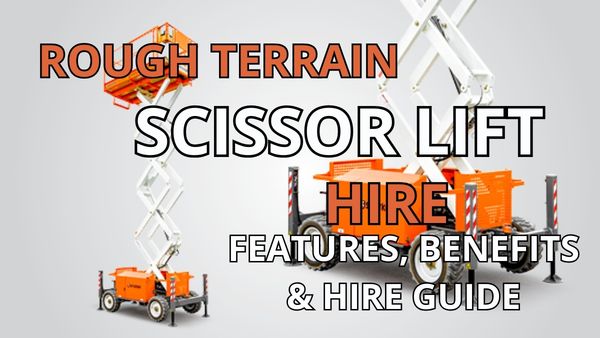
One of the biggest challenges for many construction and maintenance organisations is accessing elevated work areas safely, especially when the ground beneath you is more like a building site than a smooth, paved pathway. This is where rough-terrain scissor lifts come into their own. Built for uneven surfaces, slopes, and soft ground, these machines offer stability and performance that standard lifts just can’t match. Hiring a rough-terrain scissor lift can save both time and money, helping your project run more smoothly.
In this article, we’ll take you through the key features to expect from rough terrain designs, the benefits of using them, and guide you through the hire process. By the end, you’ll be ready to place your order with confidence and get your project moving.
What Is A Rough Terrain Scissor Lift?

A rough terrain scissor lift is designed to do exactly what you’d expect. Get you safely up and working, even when the ground underneath isn’t exactly level. This type of access equipment is purpose-built for outdoor work on uneven surfaces, making it a must-have on tricky construction sites. Unlike standard scissor lifts, these machines come with heavy-duty tyres, four-wheel drive, and hydraulic outriggers for levelling. These features let operators work safely on slopes, muddy ground, and across uneven terrain without compromising stability.
Rough terrain lifts are particularly handy for reaching tight vertical spaces – the keyword here being VERTICAL.
If your project involves getting into difficult or hard-to-reach spots, you might also want to consider a boom lift or cherry picker. To explore your options further, check out our other guide reasons to hire a cherry picker for your next project.
Why Hire A Rough Terrain Scissor Lift?
For many businesses, hiring a rough terrain scissor lift is simply a more commercially viable way to access the equipment they need, rather than purchasing it outright. For occasional jobs, buying a machine can be a significant investment, and ongoing maintenance, inspections, and testing only add to the complexity. Hiring a rough-terrain scissor lift gives you the flexibility to choose the ideal machine for each project, without taking on the long-term responsibilities that come with ownership.
Beyond the upfront cost savings, hiring access equipment also provides reassurance. Reputable hire companies maintain their machinery to a high standard and ensure all required inspections and testing are up to date, including compliance with regulations such as LOLER. Thus, you can solely focus on the task at hand.
Key Features To Look For

When selecting a rough terrain scissor lift for hire, you need to ensure the machine offers the right features to support the task at hand. Different suppliers will often offer a range of models, so it’s always worth taking the time to compare your options. The right specification can make a real difference to both safety and productivity on site.
Certain features will directly impact how well the access equipment performs in your working environment. Reliable traction and strong gradeability are essential, allowing the lift to operate safely on sloping or uneven ground without compromising stability. The platform should also comfortably accommodate personnel, tools, and in some cases, an additional power source if required for the job.
When reviewing your hire options, some key features to look out for are:
- Four-wheel or all-wheel drive – Providing the power and traction needed to confidently navigate uneven and challenging terrain.
- Heavy-duty off-road tyres – Enhancing grip and stability on soft, muddy, or loose surfaces.
- Self-levelling outriggers – Allowing for quicker setup and improved operator safety once the machine is in position.
Taking the time to assess these features before hiring ensures the machine you choose is not only suitable for the ground conditions but also supports your team in working efficiently and safely.
How To Choose The Right Lift For Your Project
Choosing the right lift to hire for your project depends on a range of factors and careful consideration. It’s important to match load capacity with working height based on the specific task and the environment you’ll be operating in. Overlooking this can result in unsuitable access equipment being selected, which may impact both safety and productivity on site.
If you’re unsure which machine best suits your requirements, see our guide to powered access and when to use it. Taking the time to assess your needs properly can prevent costly delays or the need to swap equipment mid-project.
The duration of hire can also influence your choice. Most suppliers offer daily, weekly, or long-term rental options, and the length of your project may affect not only cost but also availability and machine suitability. By considering all of these factors together, you can ensure you select the exact machine that maximises both efficiency and safety for your team.
Costing Factors
Hire costs for a rough terrain scissor lift vary between access hire suppliers. The total hire cost depends on the size of the machine, the duration of hire, and any transport requirements. As a general guide, prices often range from £200–£400 per week, depending on the machine’s specifications and working height.
To obtain an accurate quotation, it’s always best to contact your supplier directly with your specific requirements. Providing details such as site location, hire duration, and required working height will help them give you a clear and tailored price.
That said, there are several key factors that directly influence the overall cost of rough terrain scissor lift hire.
What Drives the Cost Up?
- Duration of hire – The longer the hire period, the higher the overall cost (although daily rates may reduce over time).
- Transport fees – Delivery and collection charges can add to the total hire bill, especially for remote sites.
- Damage charges – Any damage to hired access equipment is chargeable and can be costly if not covered.
- Fuel costs – Equipment returned without being refuelled may incur additional charges.
- Training requirements – While training is not required to hire a machine, operators must demonstrate compliance during use. This can result in additional training costs.
- Support services – A high-quality hire service may include in-house engineers, mobile breakdown support, and troubleshooting assistance, which is usually reflected in the price.
What Can Lower the Cost?
- Long-term hire – Extended rental periods often reduce the daily rate, offering better overall value.
- Lower-spec or poorly maintained equipment – Cheaper rates can sometimes reflect older or less reliable machinery.
- Limited support – Reduced pricing may indicate limited technical support or slower response times.
Getting the Best Value for Your Budget
The best way to ensure value for money is to speak directly with a reputable access equipment hire supplier and clarify exactly what is included as standard. Understanding what is included as standard will help you assess whether the equipment and service truly meet the needs of your project.
Safety & Training Requirements
When hiring any type of access equipment, safety should always be the top priority during operation. Operators must be compliant to use the machinery and should obtain the appropriate professional certification or training, such as IPAF. Ensuring that trained and competent personnel are operating the lift not only protects your team but also keeps your project aligned with current safety regulations.
During use, operators should always follow the guidance outlined in the machine’s operating manual. All safety features, including outriggers, tilt alarms, and emergency controls, must be correctly set up and fully functional before work begins. Taking the time to complete proper checks can significantly reduce the risk of incidents on site.
Most reputable hire suppliers will also provide a basic demonstration of how the machinery operates. This can be invaluable to familiarise oneself with controls and safety features before getting started.
Explore safety requirements and best practices in our guide, Cherry Pickers & Scissor Lift Hire: Safety & Rules.
Delivery, Hire Terms & Support
Reputable access equipment hire suppliers provide flexible hire periods, including daily, weekly, and long-term options for rough terrain scissor lifts. This flexibility allows you to match your hire duration to your project timeline. Enabling you manage both scheduling and costs more effectively.
In addition, most suppliers will offer delivery and collection services to and from your site. This removes the burden of arranging transport yourself and ensures the machinery arrives safely and on time. You are also likely to have access to a range of support services throughout your hire period. This may include on-site breakdown assistance, digital troubleshooting support, and in some cases telematics tracking to monitor usage and performance.
By choosing a trusted hire company to partner with, you help ensure smooth project execution. Your team can then focus on the job at hand, rather than worrying about logistics, maintenance, or unexpected equipment issues.
How To Hire?
If you decide that a rough terrain scissor lift is suitable for your project, next step is to place order. The process is relatively straightforward, but having the right information ready can help streamline everything and avoid unnecessary delays.
Before receiving the equipment, you’ll likely need to produce the following:
- Identification – You will need to provide valid ID to confirm your identity before the equipment can be released.
- Proof of address – Usually required alongside your ID. This is often a utility bill no older than 3 months.
- Security deposit – A refundable deposit is normally required. Normally, based on the value of the machine and the duration of the hire.
- Delivery address – Providing accurate delivery details ensures the machinery arrives on site, where and when it’s needed.
Opening a Trade Account
For many businesses, applying for a credit trade account can be highly beneficial, particularly when managing cash flow across multiple projects. Opening a trade account generally requires the same identification checks, along with supporting documentation such as plant hire insurance.
It’s always advisable to allow up to 24 hours for a trade account to be processed and approved before arranging your hire.
For a full step-by-step walkthrough, take a look at our guide: How To Set Up a Trade Account With WHC Hire.
Conclusion
Hiring a rough-terrain scissor lift offers a practical and cost-effective solution for projects that require elevated work in challenging conditions. By understanding their unique features and best applications, and by selecting the right access equipment for your specific project, you can maximise both safety and productivity across your site.
Looking for rough terrain scissor lift hire from a reputable access equipment hire supplier?
Speak to WHC Hire Services for a personalised quote tailored to your next project. You can also explore our Snorkel rough terrain scissor lift in our full range of access hire equipment on our website.